
Last updated November 15, 2026
 AC repair
 Furnace & heating
 Heat pumps
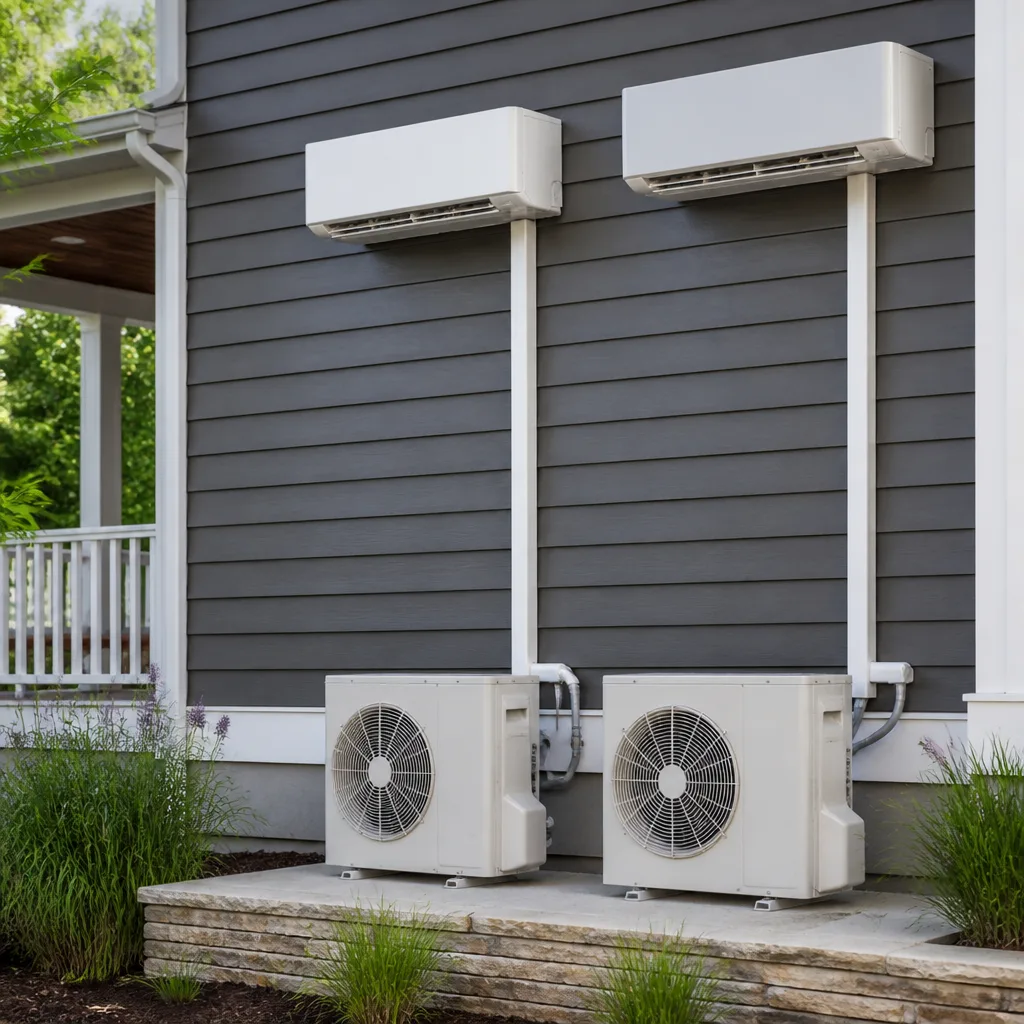 Ductless mini splits
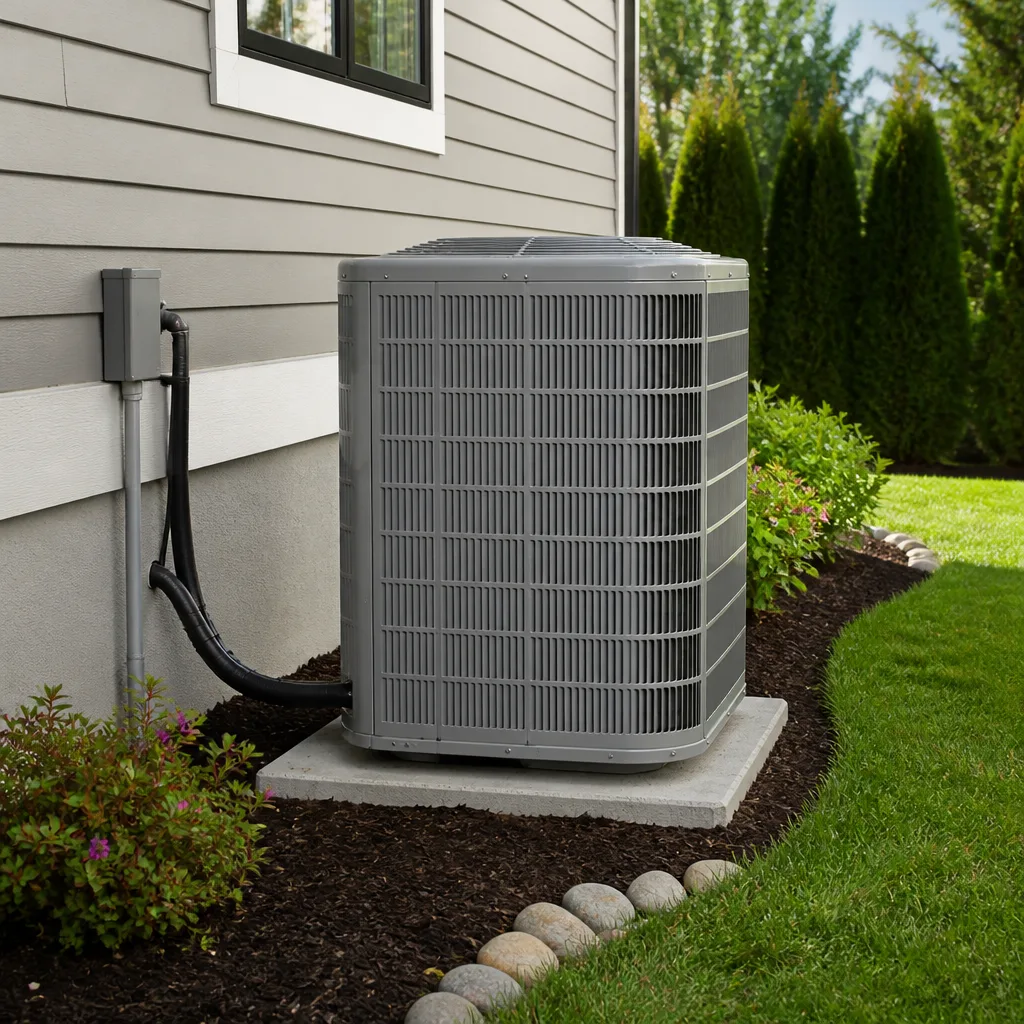 Carrier
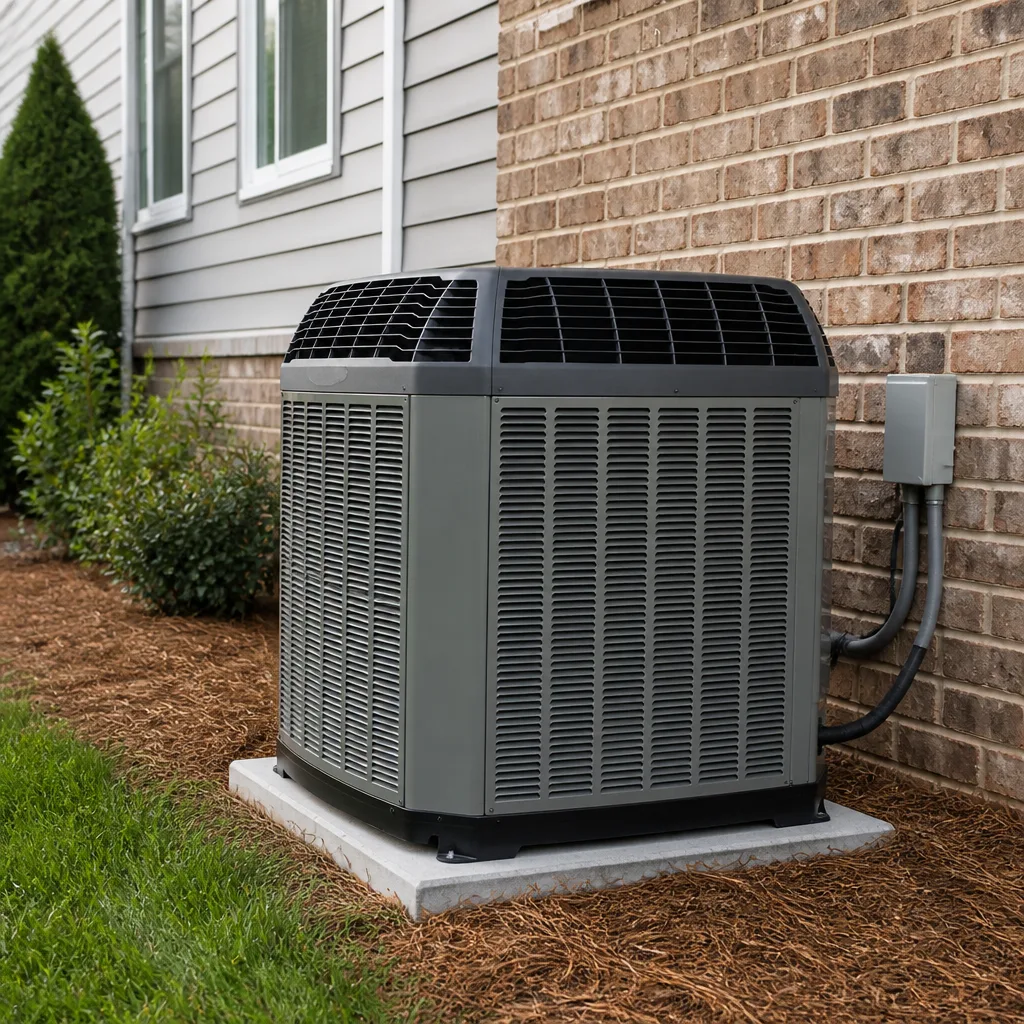 Trane
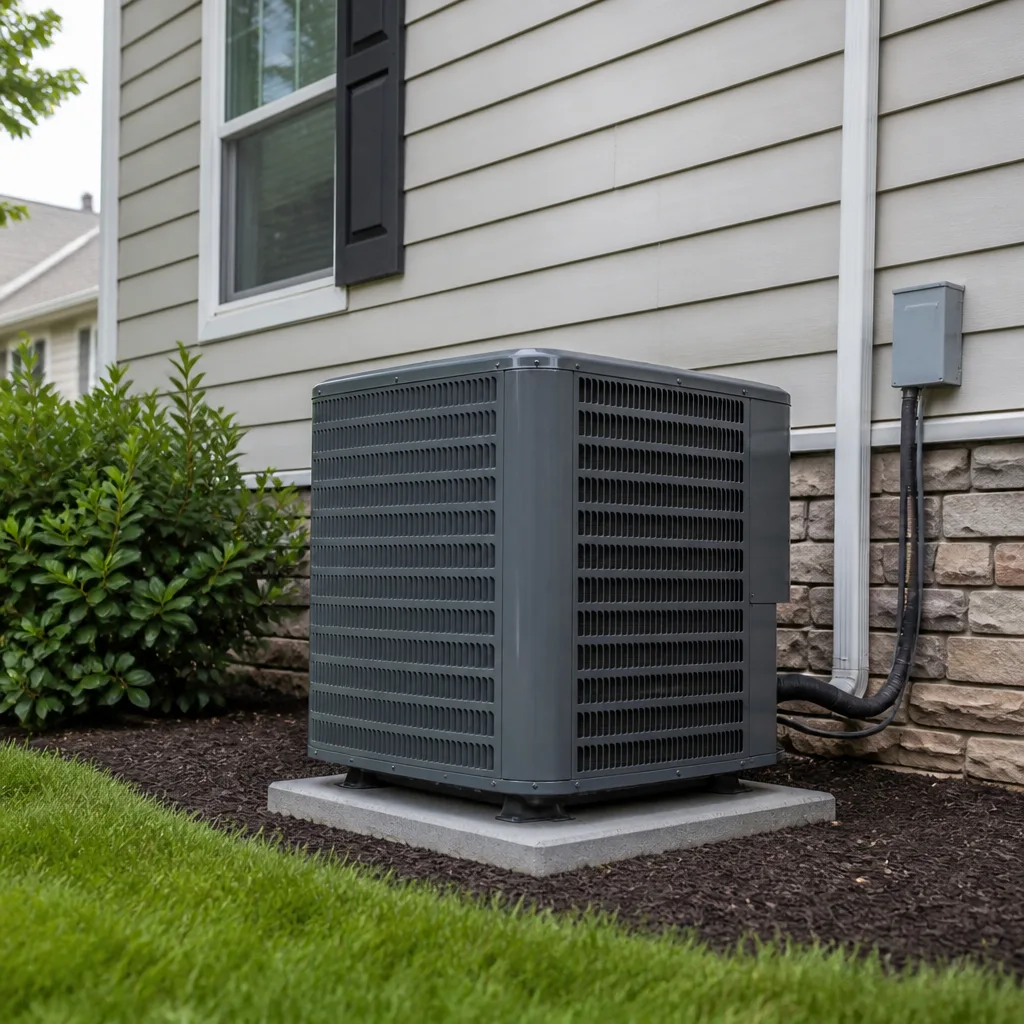 Goodman
Seasonal tune-up and full diagnostic on your Carrier, Trane, or Goodman system - readings shown to you before any repair is proposed
Diagnosis first, numbers second - you approve the repair price before a single part goes in.
Get your free estimateHow to Hire an HVAC Contractor in West Jordan: A Step-by-Step Guide
The worst time to research HVAC contractors is when your AC has failed on a 100°F July afternoon. At that point, you’ll hire whoever answers the phone first, and that’s exactly what unqualified operators count on. The furnace going out in January works the same way: pressure narrows your options to whoever picks up, not whoever is right for the job. This guide flips that. It gives you a vetting framework you build before anything breaks, so when your system fails in West Jordan, the decision is already half-made. You’ll learn how to check a Utah license, read a quote for what it hides, and separate an HVAC specialist from a generalist.
Quick Answer
To hire an HVAC contractor in West Jordan, verify their Utah contractor license through the state DOPL database, confirm they hold the correct HVAC license classification, ask specifically about brand certifications and load calculation methods, insist on a written quote that itemizes parts, labor and permits, and get the warranty terms in writing before work begins. Choose a dedicated HVAC company over a generalist home-services outfit, because diagnosis accuracy and parts knowledge improve when HVAC is the only trade a technician works in. Free estimates are standard, and the written estimate is what sets the final price.
Styles & brands we work with
- AC repair
- Furnace & heating
- Heat pumps
- Ductless mini splits
- Carrier
- Trane
- Goodman
Table of Contents
- Step 1: Verify the Contractor’s Utah License
- Step 2: Distinguish an HVAC Specialist from a Generalist
- Step 3: Ask the Right Questions Before the Technician Arrives
- Step 4: Read the Quote for What It Hides
- Step 5: Evaluate Warranty Terms in Writing
- What West Jordan’s Climate Demands of Your System
- Repair or Replace: How the Decision Should Be Made
- Common Mistakes to Avoid
- Frequently Asked Questions
Step 1: Verify the Contractor’s Utah License
Utah requires HVAC contractors to be licensed through the Division of Professional Licensing, known as DOPL. You can look up any contractor’s license status on the DOPL public database at dopl.utah.gov, which shows whether the license is active, expired, or has been disciplined. That check takes about five minutes and is the single most useful thing you can do before hiring anyone in West Jordan.
Here’s the sequence we recommend:
- Go to the DOPL license lookup. Search by the contractor’s business name or by individual name. If nothing comes back, ask why before you go any further.
- Confirm the license classification. Utah issues contractor licenses by trade and scope. Look for an active HVAC or mechanical contractor classification, not a general building or handyman license. An HVAC license means the state has verified experience and examination requirements specific to heating and cooling work.
- Check the status, not just the existence. An expired or suspended license is a stop sign. So is a license held by a business entity that doesn’t match the name on your quote.
- Check for disciplinary action. DOPL publishes disciplinary records. A history of complaints about unpermitted work or abandoned jobs is worth knowing before you sign anything.
- Confirm insurance and bonding. Ask for a certificate of insurance showing general liability coverage. Licensed and insured should mean both, and a legitimate contractor will hand this over without hesitation.
What does unlicensed look like in practice? Usually it’s a person with real technical skill and no accountability structure. The work may look fine. Then something goes wrong, the “company” evaporates, and you have no license to report, no bond to claim against, and no recourse through the state. In West Jordan, where new subdivisions and older neighborhoods sit side by side, unlicensed operators move between jobs fast. For more on how we handle service calls and what a proper repair visit involves, see AC Repair West Jordan.
Step 2: Distinguish an HVAC Specialist from a Generalist
A generalist home-services company handles plumbing, roofing, electrical, and HVAC. A dedicated HVAC specialist handles only heating and cooling. That distinction sounds minor until your system is misdiagnosed. A specialist sees hundreds of the same failure patterns and knows what a failing capacitor, a stuck reversing valve, or a restricted refrigerant charge looks like on the specific brand in front of them.
We’re biased here, so weigh the argument on its merits. A specialist works in one trade every day. Their technicians’ skills stay sharp because nothing else competes for their attention. They carry knowledge of brand-specific quirks: the way a Trane communicating system reports faults, the way a Goodman air handler is laid out differently from a Rheem. A generalist might know HVAC well enough to get by, but the depth is diluted across several trades.
Practical questions that separate the two:
- What percentage of your work is heating and cooling? A specialist says all of it.
- Which brands do your technicians work on regularly? We service Carrier, Trane, Lennox, Goodman, Rheem, York, Daikin, Bryant, and American Standard, and we mention that list because it’s concrete, not marketing.
- Do you pull permits for replacements? A specialist knows the permit process in West Jordan and builds it into the quote.
- Who diagnoses a tricky fault, and how do they reach a conclusion? Vague answers here mean the diagnosis is guesswork.
Parts availability is the other half of the equation. A specialist has supplier relationships across the major brands, which shortens wait time on a compressor or a control board. A generalist often sources through a single distributor and waits. Our team has up to 13 years of experience per technician, and that depth shows up in how fast a diagnosis becomes a repair.
Step 3: Ask the Right Questions Before the Technician Arrives
Most contractor-vetting advice tells you to ask about “experience” and “quality.” Those questions get rehearsed answers. Ask technical questions instead, because the answers either demonstrate real knowledge or expose the lack of it. This is the step where you can save yourself the most trouble, and you can do it by phone before anyone shows up in West Jordan.
Ask these specifically:
- “How do you size a replacement system?” The correct answer involves a load calculation based on your home’s square footage, insulation, window area, orientation, and air leakage. If the answer is “we match the existing tonnage” or “we go by square footage,” push back. Manual J load calculation is the industry standard, and it’s essential when replacing a furnace too.
- “Which brands are your technicians certified to work on?” Look for specific brand names, not a vague “all major brands.” If they can’t name the manufacturers they’re trained on, that’s an answer too.
- “Do you pull permits for a system replacement?” A furnace or AC replacement in most Utah jurisdictions requires a permit, and the permit triggers an inspection. Contractors who skip it save money and leave you with an unpermitted install that can complicate a home sale.
- “What’s your diagnostic process for a system that isn’t cooling?” A technician should describe checking refrigerant charge, airflow, electrical components, and the evaporator coil in a defined sequence, not guessing.
- “Can I see the written estimate before you start work?” The answer should be yes, always, and the estimate should itemize the work. Free estimates are standard and the written estimate sets the final price.
If you want a sense of what a proper AC install involves from a specialist’s view, our ac installation team walks through the process. Asking these questions does two things: it filters out the operators you don’t want, and it tells the good ones you’re serious.
Step 4: Read the Quote for What It Hides
A suspiciously low HVAC bid is not a bargain. It’s usually a signal that something is being left out, and you find out what later, when you’re paying for it. The low bid wins the job and loses the homeowner. Here’s how to read a quote for what it isn’t saying.
What a low bid commonly hides:
- Cheap parts. Off-brand components or a lower-tier equipment line than what was discussed. A Goodman unit and a top-tier variable-speed system are not interchangeable, and the quote should name the exact model.
- Labor shortcuts. Reusing the old refrigerant lines, skipping a nitrogen purge during brazing, or failing to seal ductwork properly. These save labor hours and cost you efficiency and lifespan.
- Permit avoidance. No permit means no inspection. It saves the contractor a fee and leaves you with an install that may not meet code.
- Missing scope. No line for hauling away the old equipment, no line for duct sealing or filter upgrades, no line for thermostat replacement.
- No load calculation. An undersized or oversized system on a low bid is a common outcome, and an oversized AC short-cycles and never dehumidifies properly.
What a solid quote includes:
- Exact equipment brand and model number
- SEER2 rating and capacity in tons
- Itemized labor and materials
- Permit line item
- Disposal of old equipment
- Warranty terms in writing, both parts and labor
- A stated start and completion date for scheduled installation work
When comparing two quotes in West Jordan, compare line by line, not by the bottom number. A quote that is $800 more but includes the load calculation, permit, and a higher-tier unit is often the better deal. If you need a breakdown on the cost side, the West Jordan service page covers the area we work in. We recommend treating any bid more than 20 percent below the others as a question that needs answering before you sign.
Step 5: Evaluate Warranty Terms in Writing
“We stand behind our work” is a sentence with no legal weight. What matters is the labor warranty, the parts warranty, and whether both are written into the contract you sign. A strong warranty is specific about duration, what’s covered, and who honors the claim.
There are two distinct warranty layers to understand:
- Manufacturer parts warranty. This comes from the equipment maker and typically runs five to ten years on major components. It covers the part, not the labor to install it. A failed compressor under warranty still means you pay labor to swap it, unless the contractor’s labor warranty covers it.
- Contractor labor warranty. This is the contractor’s own promise. It should state how long labor is covered, whether it covers diagnostics, and whether it’s pro-rated. One year on labor is common; ask for it in writing.
What to check before signing:
- Get the warranty language in the contract. A verbal promise is unenforceable.
- Confirm the parts warranty is registered. Manufacturer warranties often require registration within a specific window after installation, and the contractor should handle that as part of the job.
- Ask who honors the labor warranty if the original contractor isn’t available. The answer should be clear and specific.
- Check whether the warranty is voided by missed maintenance. Many manufacturer warranties require periodic maintenance, so ask what documentation you need to keep.
Good warranty terms protect you against the most expensive failure: a part that fails within a year and a contractor who won’t cover the labor. If a contractor won’t put terms in writing, that tells you what you need to know. For replacement work, our furnace repair and replacement service discusses how warranty and repair decisions are handled.
What West Jordan’s Climate Demands of Your System
West Jordan sits in the Salt Lake Valley, where summers reliably push past 95°F and winters bring sustained freezing stretches, with the valley floor often holding cold air and inversion conditions for days. That swing matters when you’re choosing equipment. A system sized and installed correctly for a Salt Lake Valley home handles both extremes; one sized for a mild climate or undersized to save money on a bid fails on the hottest and coldest days of the year.
The practical implications for hiring:
- Cooling capacity needs to account for valley heat. An undersized AC won’t hold setpoint on a 100°F afternoon, no matter how efficient it is.
- Heating needs to handle hard freezes. Furnace sizing, insulation, and duct sealing all affect how much heat you actually get to the rooms that need it in January.
- Ductwork leaks matter more here. In an area with extreme temperature swings, leaking ducts in an unconditioned attic or crawlspace bleed conditioned air. Ask whether the contractor checks duct leakage during a replacement.
- Air filtration handles dry, dusty conditions. Filters and air-handling equipment need to be sized for the dust load in the valley, not the mildest case.
This is also where the specialist-versus-generalist gap shows up. A technician who works in the Salt Lake Valley day after day knows how systems perform under these specific conditions. When you’re comparing contractors in West Jordan, ask how they size for the local climate. The answer separates a thoughtful technician from a bid sheet.
Repair or Replace: How the Decision Should Be Made
The repair-versus-replace question is where honest assessment matters most, and where an upsell-driven contractor has the most room to maneuver. A system that’s 12 years old, failing once, may need a straightforward repair. The same system failing a major component after years of rising repair costs may be closer to replacement. The decision should trace to specifics, not to a contractor’s sales target.
How a good assessment works:
- Age and condition of the system. A 15-year-old system on its original compressor is different from a 6-year-old system with a failed capacitor.
- Repair cost versus replacement cost. If the repair is a substantial fraction of replacement cost, that changes the math.
- Efficiency comparison. Older equipment runs at lower efficiency; a replacement changes your monthly bills as well as the upfront cost.
- Component history. Repeated failures of the same system point in one direction; a single one-off failure points the other way.
We offer both options and present them honestly, because a repair answer that’s actually a replacement in disguise costs you money for nothing, and a replacement answer when repair would do the same. The right call depends on your system, not on what’s easiest to sell. Our team has up to 13 years of experience and works on Carrier, Trane, Lennox, Goodman, Rheem, York, Daikin, Bryant, and American Standard, so a brand nameplate never forces you to find a different technician. Replacement work is scheduled, not rushed, and the written estimate comes before any work starts.
Common Mistakes to Avoid
- Hiring whoever answers the phone first. During a breakdown, panic drives the decision. Build your short list of vetted contractors before the emergency, so the call is a confirmation rather than a gamble.
- Skipping the DOPL check. Utah’s license lookup is free and public, and a contractor who’s licensed wants you to check. A contractor who dodges the question is a red flag you shouldn’t ignore.
- Choosing the lowest bid without reading it. In West Jordan, where old and new housing stock sit next to each other, a low bid often hides cheaper equipment or an unpermitted install. Compare the line items, not the total.
- Accepting a verbal warranty. “We’ll take care of you” is a sentence, not a contract. Get labor and parts terms in writing before work begins.
- Letting the contractor skip the load calculation on a replacement. Matching the old tonnage is a shortcut, not a method. Ask for the load calculation, and don’t accept “we size by square footage.”
- Skipping the permit to save time. An unpermitted install in a Salt Lake Valley home can surface at sale and cost more than the permit fee ever would.
- Signing before the contract is complete. The written estimate should include the brand, model, and scope. If those are missing, the contract isn’t done.
See the difference
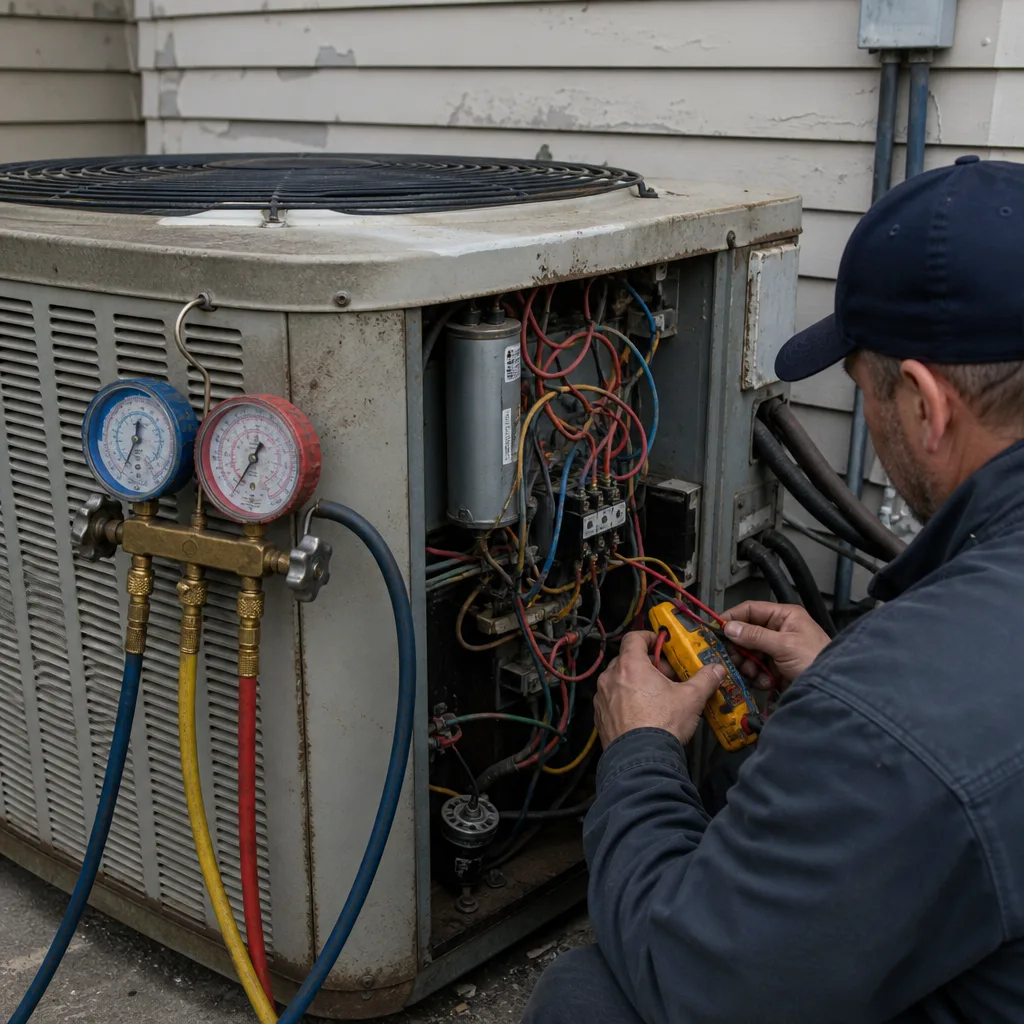 Before
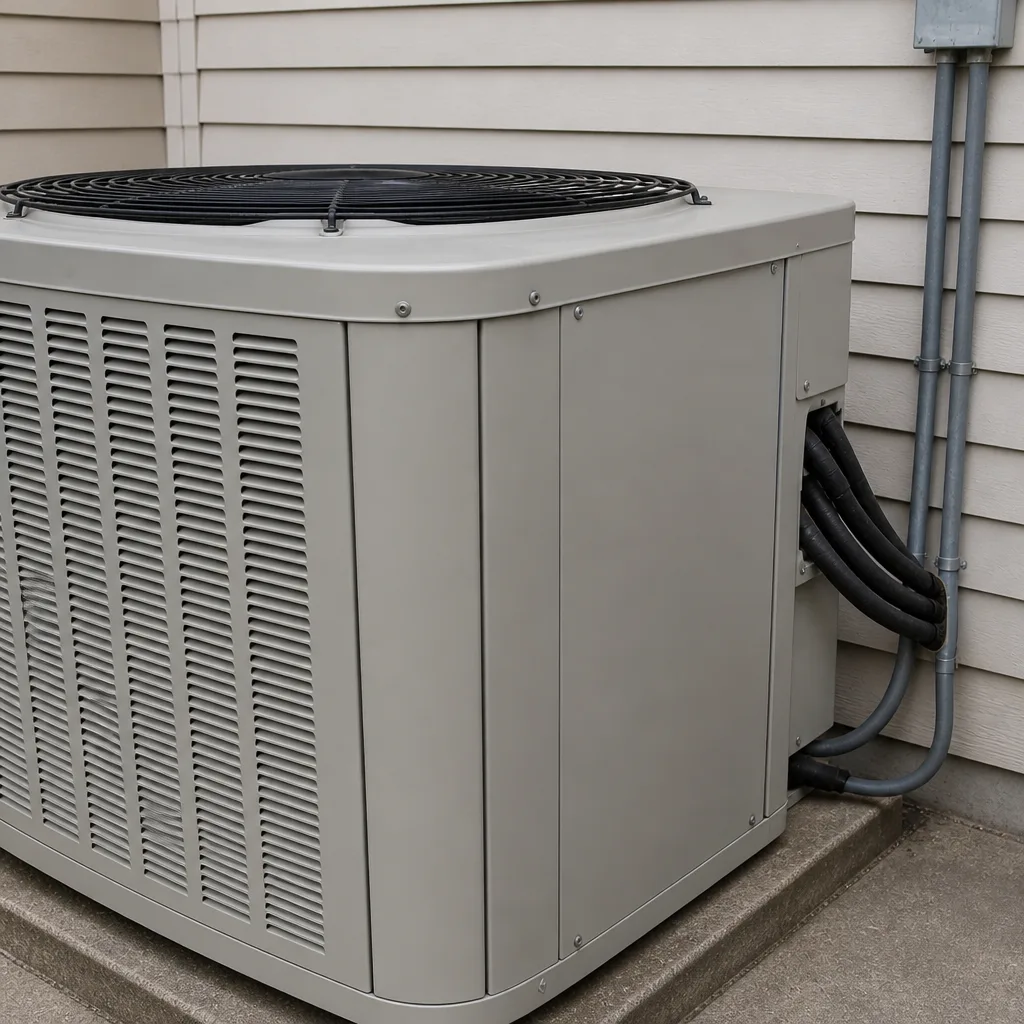 After
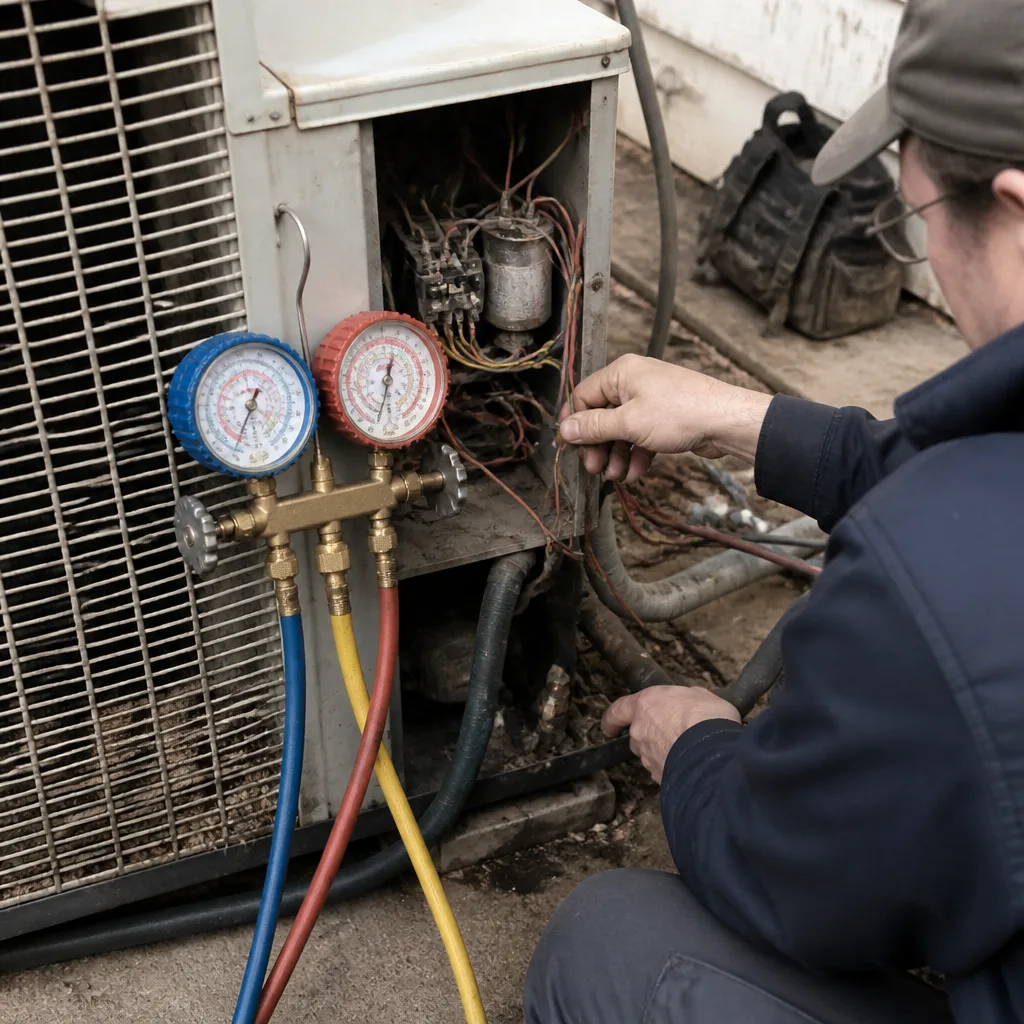 Before
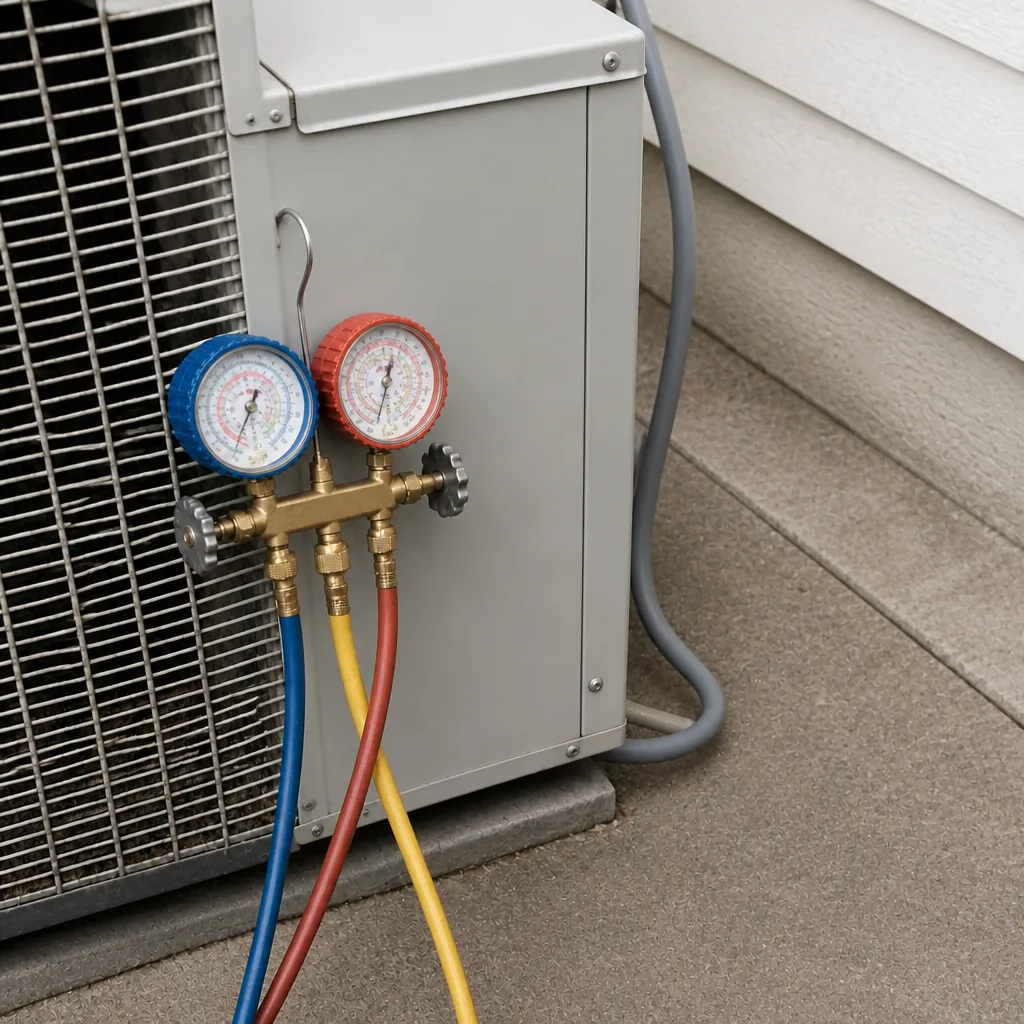 After
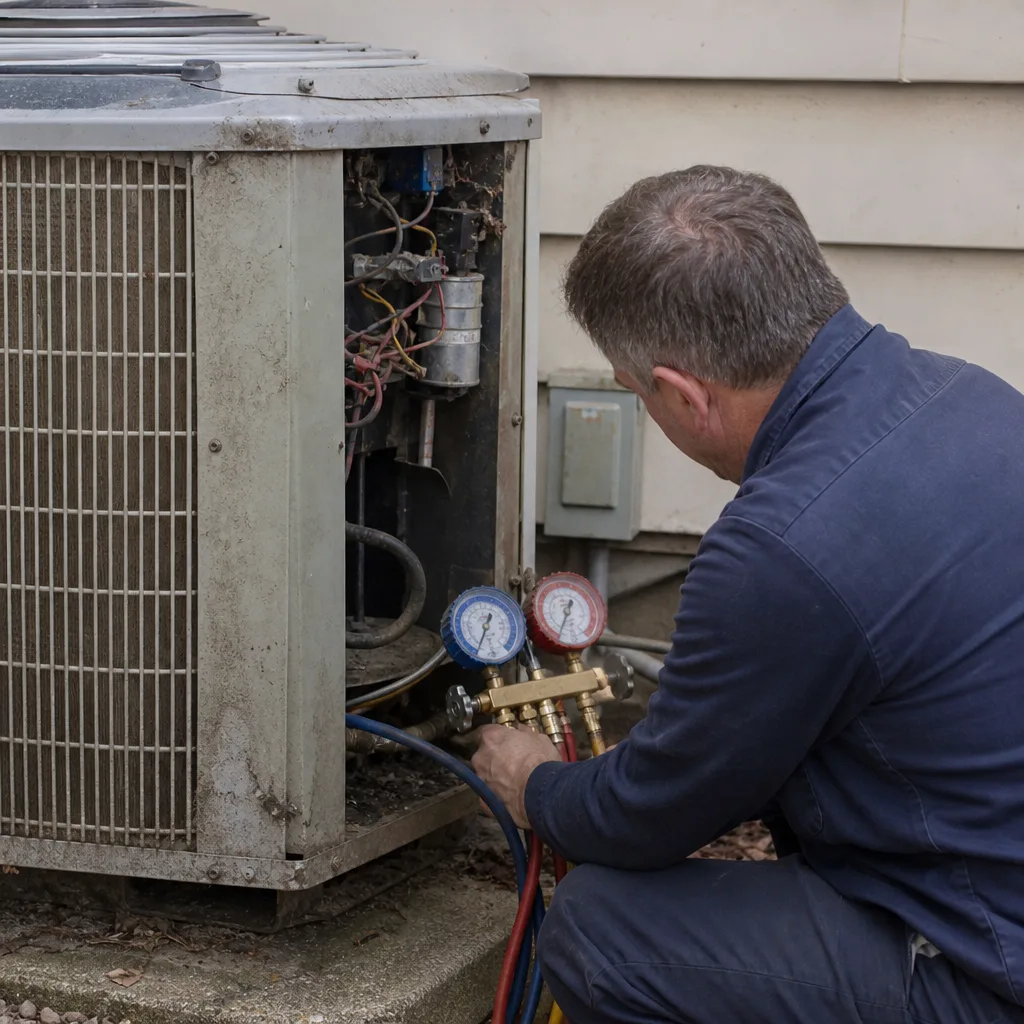 Before
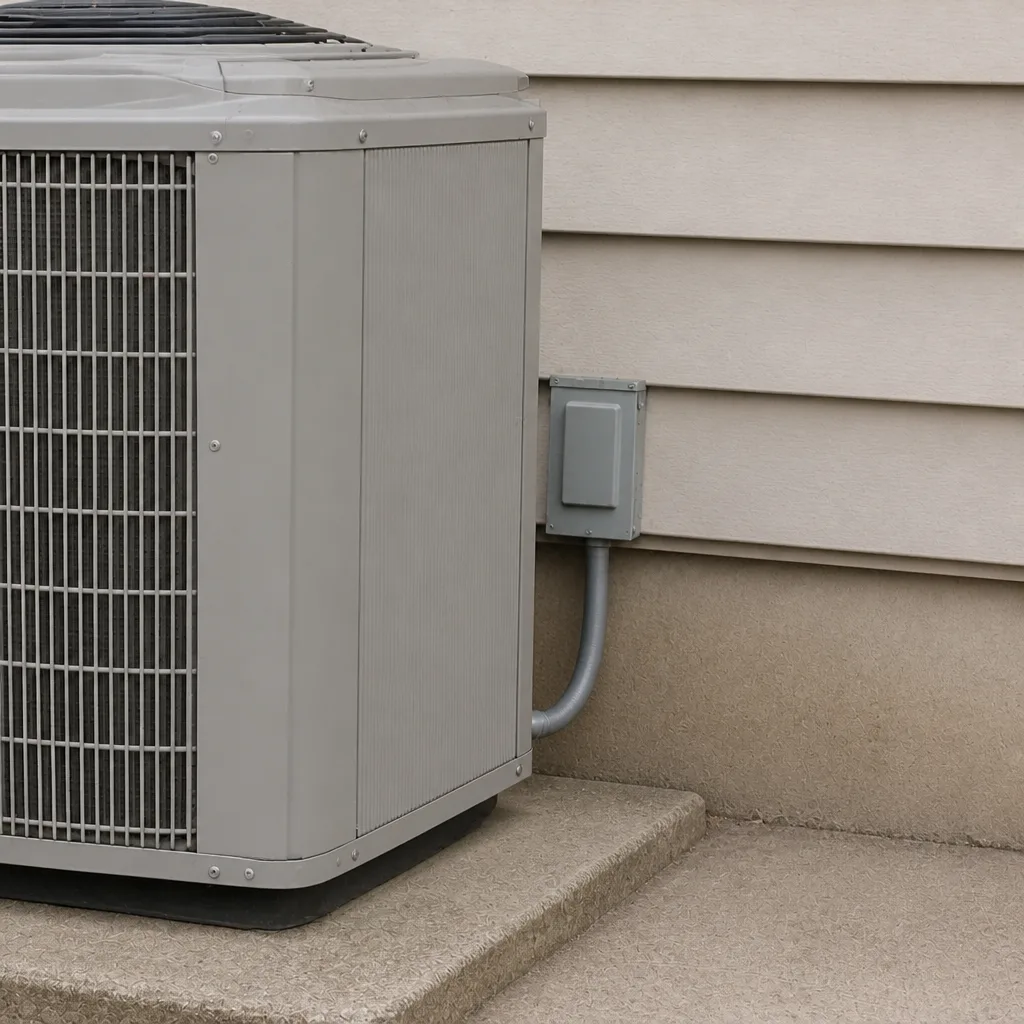 After
When to Call a Professional
Some HVAC problems are genuinely urgent. If your AC stops cooling on a July day when the temperature is pushing 100°F, or your furnace fails during a deep freeze, that’s a health and safety issue for anyone in the home, especially children and older adults. If you smell gas, leave the house and call your gas utility before calling anyone for repair. If the system is blowing warm air, running continuously without reaching setpoint, or short-cycling, get a technician out before it becomes a bigger repair. Electrical components inside an air handler or furnace, including capacitors and control boards, carry enough energy to cause serious injury, so panel work belongs with a trained technician, not a homeowner with a screwdriver. AC Repair West Jordan offers free estimates in West Jordan. Call (833) 946-8705. We answer 24/7. Fast dispatch from 7am to 7pm, Sunday through Friday.
Frequently Asked Questions
Look up the contractor on the Utah DOPL license database at dopl.utah.gov, confirm the license is active and in an HVAC or mechanical classification, and check for any disciplinary record. Ask for a certificate of insurance while you’re at it. A legitimate contractor will supply both without hesitation, and the check takes only a few minutes.
Ask how they size a replacement system (the answer should be a load calculation, not square footage), which brands their technicians are trained on, whether they pull permits for replacements, and how their diagnostic process works for a system that isn’t cooling. Ask for the written estimate to be provided before work starts. Specific technical answers are the difference between a specialist and an operator with a phone number. Call (833) 946-8705 for a free estimate.
A bid well below the others usually signals cheaper parts, skipped permits, or labor shortcuts the quote doesn’t name. In West Jordan, where replacement jobs are common in older neighborhoods, a low bid can mean an unpermitted install that causes problems at resale. Ask for the itemized quote with brand and model numbers before you compare totals.
A specialist works in heating and cooling only and can name the brands their technicians are trained on, describe their load-calculation method, and explain how they handle permits. A generalist divides attention across several trades. Our team focuses on HVAC only and works on Carrier, Trane, Lennox, Goodman, Rheem, York, Daikin, Bryant, and American Standard. Call (833) 946-8705 to talk through your system.
The answer depends on the system’s age, the repair cost relative to replacement, its efficiency, and whether it has a history of failures. If the repair is a substantial fraction of replacement cost or the unit has repeated failures, replacement often makes more sense. A good contractor offers both options with an honest assessment rather than a default upsell. Call (833) 946-8705 for an estimate on both paths.
Warranty terms determine what happens when a part fails after installation. A manufacturer parts warranty covers the part but not the labor to replace it, so the contractor’s labor warranty is the part that protects your wallet. Get both written into the contract, and confirm who honors the labor warranty if the original contractor isn’t available.
The Bottom Line
Hiring an HVAC contractor in West Jordan comes down to five steps you can complete before anything fails: verify the Utah DOPL license, choose a specialist over a generalist, ask technical questions before the technician arrives, read the quote line by line, and get warranty terms in writing. Build your short list now, when there’s no pressure. Then when the furnace fails in January or the AC quits in July, you already know who to call. Free estimates are standard, the written estimate sets the final price, and a real specialist will welcome every question you ask.
When you’re ready to talk, call (833) 946-8705 for a free estimate. We answer 24/7. Fast dispatch from 7am to 7pm, Sunday through Friday.
Written by the team at AC Repair West Jordan.