
Last updated November 15, 2026
 AC repair
 Furnace & heating
 Heat pumps
 Ductless mini splits
 Carrier
 Trane
 Goodman
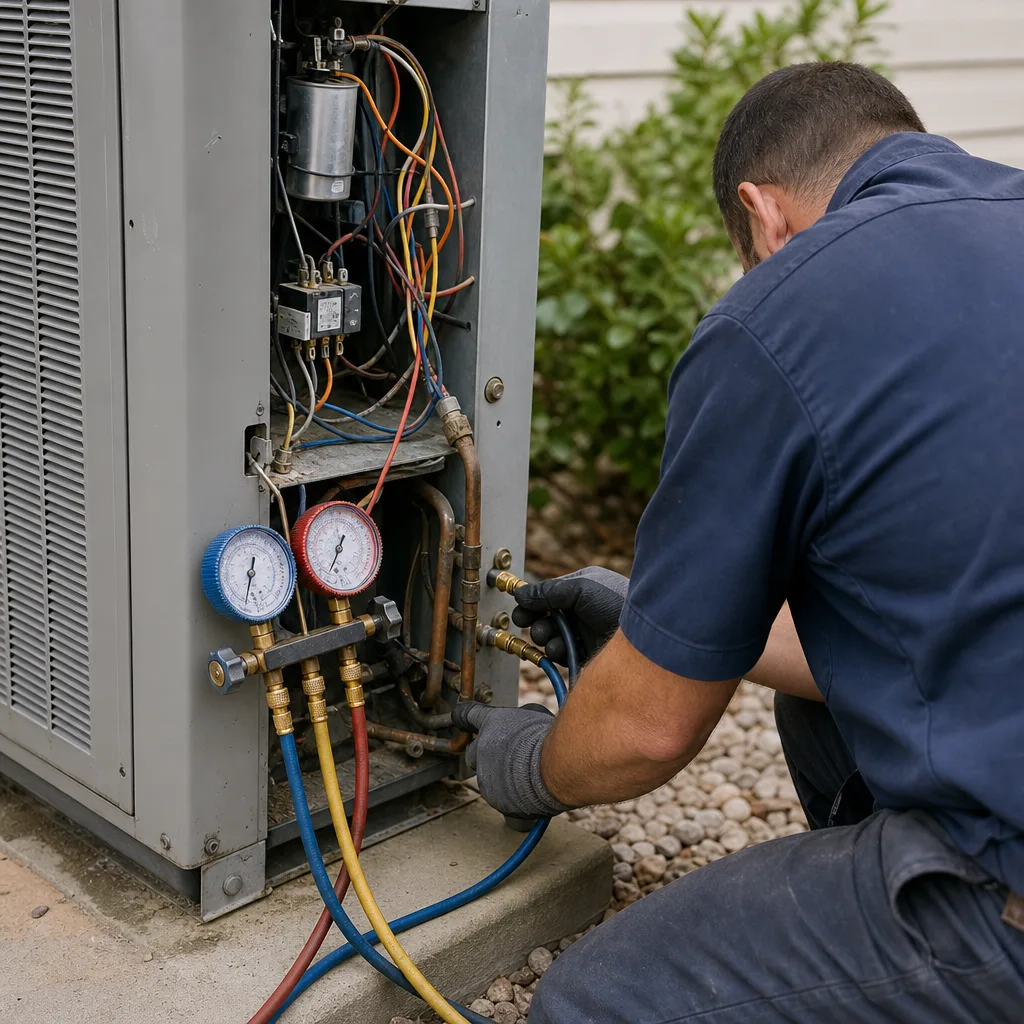
Seasonal tune-up and full diagnostic on your Carrier, Trane, or Goodman system - readings shown to you before any repair is proposed
Diagnosis first, numbers second - you approve the repair price before a single part goes in.
Get your free estimateHVAC Warning Signs: A West Jordan Homeowner’s Reference Guide
A furnace that short-cycles on a cold January morning in West Jordan isn’t the same urgency level as one that smells like burning plastic, but most homeowners treat both the same way: either ignore it or call in a panic. That gap in response time is often the difference between a small repair and a full system replacement. A single symptom, on its own, tells you almost nothing. What matters is which symptom, in what weather, alongside what other clues. This guide sorts warning signs into three tiers – act today, schedule this week, and watch and log – so you can respond to a real problem at the right speed and skip the guesswork.
Quick Answer
Sort HVAC warning signs into three tiers: call today for burning smells, carbon monoxide alarms, gas smells, no heat or no cooling in extreme temperatures, or water leaking from the equipment; schedule within a few days for short cycling, unusual noises, weak airflow, or a bill that jumped without a matching weather change; and watch and log mild, intermittent behavior that clears on its own. West Jordan’s high-desert summers and cold, dry winters stress equipment in predictable ways, so the same symptom can mean something different in July than it does in January.
Styles & brands we work with
- AC repair
- Furnace & heating
- Heat pumps
- Ductless mini splits
- Carrier
- Trane
- Goodman
Table of Contents
- The Three-Tier Urgency Framework
- Summer Warning Signs: When Heat Stress Becomes a Failure
- Winter Warning Signs Specific to Forced-Air Furnaces
- What a Spike in Your Utility Bill Actually Tells You
- Signs the System Is Repairable vs. Signs It’s Time to Replace
- The Rule of 5000: A Simple Replacement Math Check
- What to Log (and Why It Makes Diagnosis Faster)
- Common Mistakes to Avoid
- When to Call a Professional
- Frequently Asked Questions
The Three-Tier Urgency Framework
Every warning sign in this guide lands in one of three buckets. The point isn’t to memorize symptoms; it’s to know how fast to move when you see one. West Jordan homeowners who learn this framework stop calling for things that can wait and stop waiting on things that can’t.
Tier 1 – Act Today (Call and Stop Using the System)
- Any smell of burning plastic, rubber, or electrical insulation coming from vents or the equipment itself. Shut the system off at the thermostat and call.
- A carbon monoxide alarm sounding or any headache, dizziness, or nausea that appears only indoors. Leave the home and call from outside.
- A gas smell near the furnace or water heater. Do not flip switches. Leave and call your gas utility first, then us.
- Water pooling around the indoor unit or furnace, which can mean a blocked drain line or a frozen coil thawing.
- No heat during a hard freeze or no cooling during a heat wave, especially with young children, elderly adults, or anyone with a health condition in the home.
- Loud banging, screeching, or metal-on-metal grinding that starts suddenly and doesn’t stop.
Tier 2 – Schedule Within 48 to 72 Hours
- Short cycling: the system turns on and off every few minutes instead of running a full cycle.
- Airflow that feels noticeably weaker at some vents than others.
- Rattling, humming, or clicking that comes and goes.
- Ice forming on the outdoor AC unit or refrigerant lines.
- A bill that climbed well beyond what the weather explains.
Tier 3 – Watch and Log
- Occasional clicks from the thermostat.
- A single strange noise you can’t reproduce.
- Condensation on ducts during a humid stretch.
- Mild temperature swings between rooms that don’t get worse.
None of Tier 3 is cause for alarm on its own. Write it down, note the date and the weather, and see whether it repeats. Our technicians have up to 13 years of experience, and the single most useful thing a homeowner can bring to a diagnostic visit is a short log of what happened and when. More on that below in What to Log.
Summer Warning Signs: When Heat Stress Becomes a Failure
Air conditioning equipment is engineered to a design temperature, and West Jordan summers regularly push past it. When the outdoor temperature climbs well above the range your unit was built to handle, the system loses efficiency and runs longer cycles – that’s normal stress, not a defect. The question is how to tell normal stress from a refrigerant leak or a failing compressor.
Normal heat stress looks like this: the system runs almost continuously through the hottest part of the afternoon, the indoor temperature creeps up a degree or two above the setpoint, and everything returns to normal once the sun drops and the outside air cools. The house still feels like a house, just a warmer one.
An actual refrigerant or compressor problem looks different:
- The air coming from the vents is barely cool, or room temperature, even in the morning when outdoor temps are mild.
- The outdoor unit runs but the fan blows warm air.
- Ice forms on the outdoor unit or the copper lines, which points to low refrigerant or restricted airflow, not to weather.
- The compressor short cycles in a rhythm rather than running long.
- A hissing or bubbling sound near the refrigerant lines.
That distinction matters because a hot afternoon produces the same complaint – “the AC isn’t keeping up” – from a system that’s fine and a system that’s low on charge. Cooling problems in July are one of the most common calls we take in West Jordan. If the vents are blowing cool in the morning and warm by 4pm, the system is likely working at its limit. If they’re warm at 8am, something is wrong with the equipment itself. For active cooling failures, our AC Repair West Jordan team can diagnose the difference and tell you whether it’s a charge issue, a compressor, or a system that’s simply undersized for the square footage.
One more thing worth knowing: a unit that runs continuously is doing its worst wear on the compressor, which is the most expensive component to replace. That’s why “watch and log” is a bad strategy when the outdoor temperature stays high for a week. Continuous running accelerates wear on a part you’d rather not replace.
Winter Warning Signs Specific to Forced-Air Furnaces
Winter is the season that produces the warning signs most worth learning, because two of them are tied to carbon monoxide risk. Cold, dry West Jordan winters mean the furnace runs hard for months, and most of the failures that matter show up as a small set of repeatable symptoms.
Pressure Switch Faults
The pressure switch confirms that the exhaust vent is drafting properly before the burners light. When it faults, the furnace tries to start, the draft inducer runs, and then the burners shut off without ever producing heat. You’ll often hear the sequence repeat two or three times before the system locks out. In our experience, a pressure switch fault is frequently a venting problem – a blocked flue, a bird’s nest, or a condensate line that froze – rather than a failed switch. It’s a Tier 2 sign, but don’t keep resetting it. If a furnace won’t light repeatedly, stop and schedule the visit.
Inducer Motor Noise
The draft inducer is the small blower that pulls exhaust out of the heat exchanger. As its bearings wear, it starts to squeal, whine, or rumble, especially at startup. That noise is a Tier 2 sign – the furnace still heats, but the motor is on its way out, and a seized inducer means no heat at all.
Cracked Heat Exchanger Indicators
This is where caution matters most. A cracked heat exchanger can let combustion gases mix with the air moving through your ducts, and that is a carbon monoxide risk. Signs to watch for:
- A carbon monoxide alarm, ever.
- A yellow or orange flame instead of a steady blue one, or a flame that lifts and dances.
- Soot streaks or scorching near the burner compartment.
- A persistent metallic or exhaust smell from the vents.
- Headaches, nausea, or drowsiness that clear when you leave the house.
Any of these is a Tier 1 sign. Turn the furnace off at the thermostat, open windows, and call. We don’t recommend a homeowner attempt to inspect a heat exchanger – it requires disassembly and a trained eye, and the risk of missing a crack is a risk no one should take. If you’re seeing any of these signs, reach out for furnace repair before the next cold snap. We service Carrier, Trane, Lennox, Goodman, Rheem, York, Daikin, Bryant, and American Standard, so a brand nameplate is never a reason to call someone else.
What a Spike in Your Utility Bill Actually Tells You
A high utility bill is the single most misread HVAC warning sign. Homeowners either panic and assume the system is dying, or ignore it for two seasons because “it was a hot summer.” The bill, by itself, means nothing until you compare it to the weather that produced it. The way to do that without a spreadsheet is a degree-day comparison.
What a Degree-Day Comparison Is
Heating and cooling degree days measure how hard the weather pushed your system. A cooling degree day is one degree of average daily temperature above 65°F; a heating degree day is one degree below. Your utility’s website usually publishes the figure for the billing period. What you’re looking for is the ratio: how much your usage changed relative to how much the weather changed.
- Pull the degree-day number for this month and the same month last year from your utility’s report.
- Pull the kilowatt-hours (for cooling) or therms (for heating) you used in each period.
- Divide usage by degree days in each period to get a per-degree-day figure.
- Compare the two figures. If they’re close, weather explains the bill. If this year’s is meaningfully higher, the equipment is working harder per unit of weather – that’s degradation.
The pattern of change tells you more than the bill does. A per-degree-day figure that climbs slowly over two or three seasons usually points to a dirty coil, a restricted filter, a refrigerant charge that’s drifted low, or a failing blower motor. A sudden jump points to a single component that just failed. A jump that shows up only on the heating side points to the furnace, and a jump that shows up only on the cooling side points to the AC.
This is where brand-agnostic diagnostics matter. A system’s age, refrigerant type, and design all change what a bill spike means. Because we work across Carrier, Trane, Lennox, Goodman, Rheem, York, Daikin, Bryant, and American Standard, we can look at the per-degree-day trend and tell you what’s cheap to fix and what isn’t – without steering you toward a brand we happen to be a dealer for. That lack of manufacturer allegiance is deliberate.
Signs the System Is Repairable vs. Signs It’s Time to Replace
The repair-versus-replace question is where homeowners get the least honest information in this trade. A technician who only sells new systems will find a reason to replace; a technician who only repairs will patch a system three times in one season. The honest answer comes from the equipment, not from a sales incentive.
Signs the System Is Still Repairable
- The failure is a single component: a capacitor, contactor, ignitor, pressure switch, or blower motor.
- The system is under 12 to 15 years old and the repair cost is a small fraction of replacement.
- The refrigerant problem is a single accessible leak on a line set you can see and reach.
- The furnace heats well and the compressor runs well once fixed – the system has life left in it.
- Ductwork is sound, the heat exchanger is intact, and the cabinet isn’t rusting through.
Signs Replacement Is the More Economical Path
- The compressor has failed, and the system is over a decade old. Compressor replacement is often half the cost of a new system.
- The system uses R-22 refrigerant. If it’s low, topping it off is no longer a durable fix.
- The heat exchanger is cracked or badly rusted. That’s a safety issue, not just a repair decision.
- You’ve had two or more significant repairs in the last two seasons.
- The system is undersized for the home, and no repair will fix a capacity problem.
When repair and replacement are close in cost, we tell people so. Both options are always on the table. If replacement is the answer, AC installation and furnace replacement are handled by the same team – you don’t need a different contractor for the heating half of the job. Full-scope HVAC coverage from one company means one set of recommendations for the whole system, not two bids argued over between contractors.
The Rule of 5000: A Simple Replacement Math Check
There’s a quick arithmetic check that helps homeowners decide whether to repair or replace without any sales pressure. Multiply the age of the system in years by the cost of the repair. If the result is over 5,000, replacement is usually the better path. This is commonly called the Rule of 5000, and it’s a rough tool, not a verdict – but it’s a useful reality check when a technician quotes a repair.
The math works because it weights two things at once: how much life the system has already spent, and how much you’re about to put into it. A 6-year-old system with a $400 repair scores 2,400 – a straightforward fix. A 15-year-old system with a $600 repair scores 9,000 – the number is telling you that the money is going into a system that’s already near the end of its useful life.
Here’s what the Rule of 5000 doesn’t capture, and why the number is only the start of the conversation:
- Efficiency gains. A replacement usually carries a higher efficiency rating than the unit it replaces, which shows up in every bill after that.
- Refrigerant type. An older system on a phased-out refrigerant is a bad repair candidate no matter what the math says.
- Safety issues. A heat exchanger problem bypasses the math entirely.
- Comfort problems. If the home has hot and cold rooms, a properly sized replacement can solve what no repair will.
Run the number yourself before anyone quotes you. If a technician pushes replacement on a system that scores well below 5,000, or patches a system that scores far above it, ask why. When a new system is the right answer, we walk through the options, size the equipment to the house, and give you a written fixed price before installation. We work across York, Daikin, Bryant, and American Standard, among the other major brands, so the recommendation is driven by your home, not by a dealer incentive.
What to Log (and Why It Makes Diagnosis Faster)
Tier 3 warning signs are easy to ignore because they’re mild, and easy to forget because they’re intermittent. The solution is also the cheapest diagnostic tool you own: a written log. Homeowners who keep one walk into a service call with a record that saves time and often money.
A useful log records four things for each event:
- What the system did. “Short-cycled three times in the morning,” “rattled on startup,” “no heat for 20 minutes then it came back.”
- The weather that day. “High of 98°F,” “first hard freeze of the year,” “rainy and humid.”
- Whether it repeated. Once or every day for a week.
- What else was happening. A new thermostat setting, a filter changed the day before, a power flicker overnight.
The weather column is the one homeowners skip and technicians love. A West Jordan temperature swing between a mild morning and a hot afternoon produces very different system behavior than a steady day in the 70s, and the difference tells a technician what to look for. If the system rattles only on the first run of the day, that points at a different component than a rattle that happens every cycle. If the bill spike shows up the month the outdoor temperature first crossed 100°F, that’s a different story than one that shows up in March.
Logging also catches the patterns that matter most: a symptom that shows up the same week for three years running is a real, repeating fault, not normal behavior. When you finally call, that pattern is the fastest path to the right diagnosis. If the log is short and the problem is intermittent, mention that when you call – we can talk through what we’re looking for before anyone comes out.
Common Mistakes to Avoid
- Treating every weird noise as an emergency. Short cycling on a cold morning and a burning smell are both “the furnace is acting up” but they demand very different response times. Sort the symptom into a tier before you decide.
- Resetting a furnace that has locked out more than once. A pressure switch fault that repeats is telling you the venting has a problem. Each reset runs the system without proof that it’s drafting correctly.
- Chasing a bill spike without the weather data. A high bill after a record hot summer in West Jordan is not the same signal as the same bill after a mild June. Without degree days, you’re guessing.
- Topping off refrigerant without fixing the leak. A low charge means a leak somewhere. Adding refrigerant without finding it means you’ll be back next season with the same problem.
- Assuming a brand nameplate limits who can work on your system. A technician who only works one brand will default to that brand’s parts and story. We work nine brands across the trade, so the recommendation stays on the equipment’s merits.
- Running the AC continuously for days at a time during a heat wave without checking anything. Continuous running is hard on the compressor. If it hasn’t shut off in three days, that’s a Tier 2 sign, not normal summer behavior.
- Ignoring a carbon monoxide alarm “because it went off once.” A CO alarm that sounds even once is a Tier 1 event. Turn the system off and call. It’s the one warning in this guide where overreacting is always the right call.
When to Call a Professional
Call today for any Tier 1 sign: a burning or exhaust smell, a carbon monoxide alarm, a gas smell, water pooling at the equipment, a hard freeze or heat wave with no heat or no cooling, or metal-on-metal grinding that starts suddenly. Call within 48 to 72 hours for short cycling, weak airflow, ice on the outdoor unit, new rattles or hums, or a bill spike you can’t tie to weather. And call if you’re staring at a repair quote and want a second opinion on whether repair or replacement is the honest answer – we’ll give you both options and the math behind them.
AC Repair West Jordan offers free estimates in West Jordan – call (833) 946-8705. We answer 24/7. Fast dispatch from 7am to 7pm, Sunday through Friday. Our technicians have up to 13 years of experience, we cover Carrier, Trane, Lennox, Goodman, Rheem, York, Daikin, Bryant, and American Standard, and heating and cooling are handled by the same specialist team, start to finish.
Frequently Asked Questions
A carbon monoxide alarm or the smell of burning plastic from the vents is the most urgent, and either one means shutting the system off at the thermostat and calling before doing anything else. Gas smells are a close second: leave the home and call your gas utility first. These are the only symptoms in this guide where the response isn’t “how soon can we schedule,” it’s “stop using the system now.” Call (833) 946-8705 for an exact quote on the repair – estimates are free.
Running all day during an extreme heat wave is often normal stress, not a failure, as long as the house still cools reasonably and the vents blow cool air in the morning. It becomes a warning sign if the air from the vents is warm even in mild morning temperatures, if ice forms on the outdoor unit, or if the system turns on and off on a rhythm instead of running continuously. That pattern points to a refrigerant or compressor issue rather than weather. Call (833) 946-8705 if you’re not sure which you’re seeing.
Compare usage per degree-day between this period and the same period last year, and if the per-degree-day figure has climbed, the equipment is degraded rather than the weather. Your utility’s website usually publishes the degree-day figure for the billing period. A slow climb over two or three seasons points to a dirty coil, restricted airflow, or a charge issue; a sudden jump points to a single failed component. Call (833) 946-8705 for an exact quote on a diagnostic visit – estimates are free.
Short cycling is a Tier 2 sign, not a Tier 1 emergency, unless it’s accompanied by a carbon monoxide alarm, a burning smell, or a gas smell – those are always Tier 1. Short cycling means scheduling a visit within a few days, not waiting until spring. The pattern gets worse, not better, and it wears the equipment each time it starts. Call (833) 946-8705 to get it on the schedule.
A yellow or orange flame instead of a steady blue one, soot streaks or scorching near the burner, a metallic or exhaust smell from the vents, and headaches or nausea that clear when you leave the house are all indicators. A carbon monoxide alarm is the clearest sign of all. Any of these means turning the furnace off and calling – do not inspect the heat exchanger yourself, it requires disassembly and the risk of missing a crack is real. Call (833) 946-8705 for an exact quote on the inspection – estimates are free.
Use the Rule of 5000 as a starting point: multiply the age of the system by the cost of the repair, and if the result is over 5,000, replacement is usually the more economical path. Then check the exceptions – a cracked heat exchanger, a phased-out refrigerant, or an undersized system for the home can override the math entirely. We work across all nine major brands and offer both options, so you get an honest read on your specific system, not a default upsell. Call (833) 946-8705 to talk it through.
The Bottom Line
The value of this guide is in the triage, not the list. A burning smell and a short-cylcing furnace are both warning signs, but treating them as the same urgency either ignores a real danger or spends money on a system that was fine. Sort your symptom into a tier before you decide what to do. West Jordan’s summers push equipment past its design range, and its winters put the carbon monoxide risk on the burner and heat exchanger – those are the two climate-driven fault patterns worth watching every season. Log what you see, compare bills to degree days, and run the Rule of 5000 before anyone quotes you. And when a warning sign crosses into Tier 1, call.
Heating and cooling covered, start to finish. AC installation, furnace repair, and furnace replacement, all from one specialist team that knows your brand. Call (833) 946-8705 for a free estimate. We answer 24/7. Fast dispatch from 7am to 7pm, Sunday through Friday.
Written by the team at AC Repair West Jordan.
See the difference
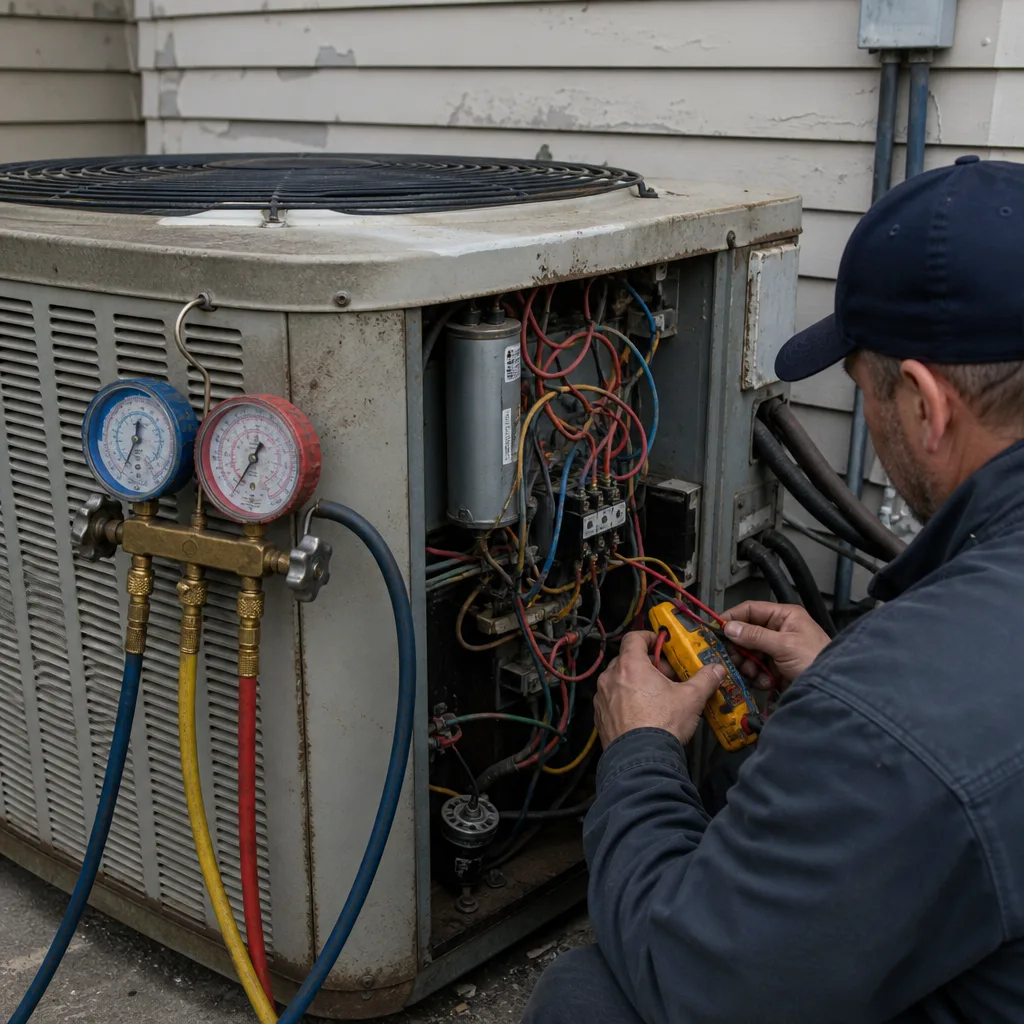 Before
 After
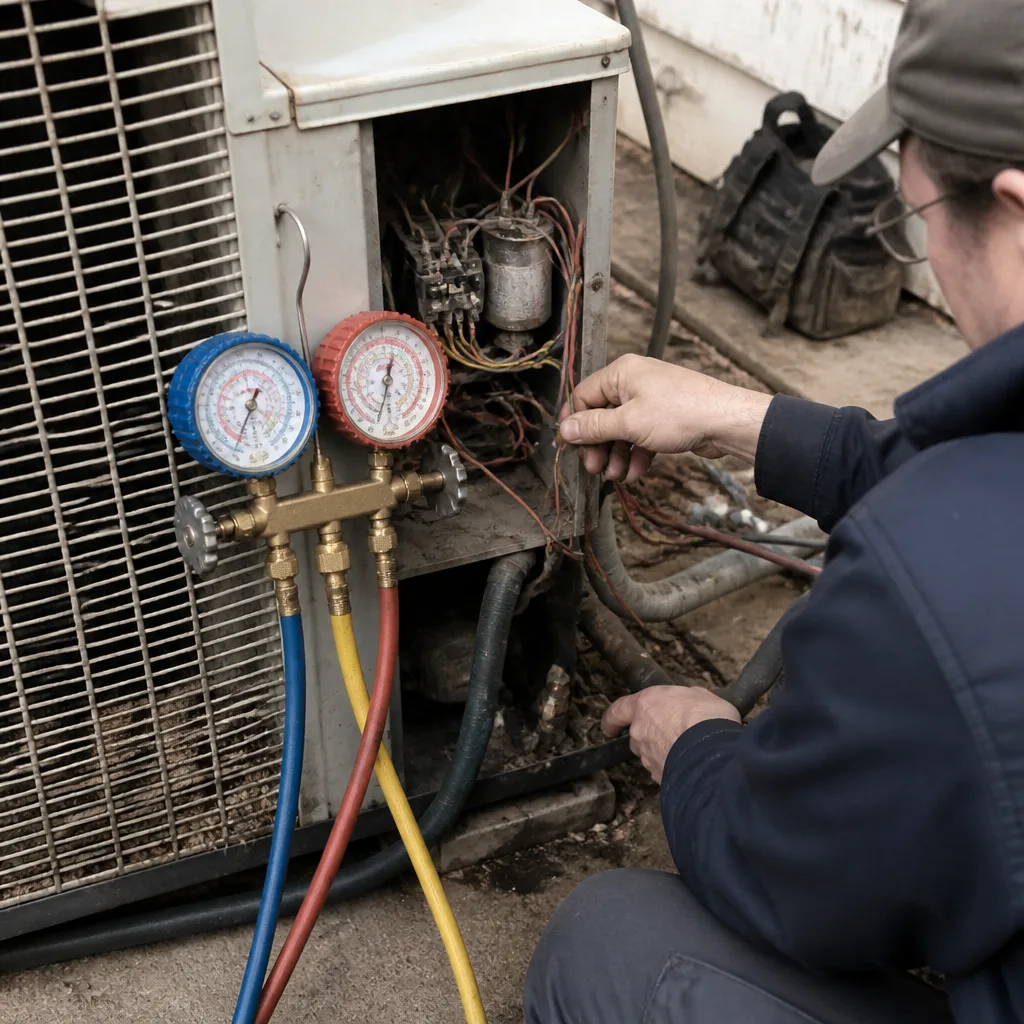 Before
 After
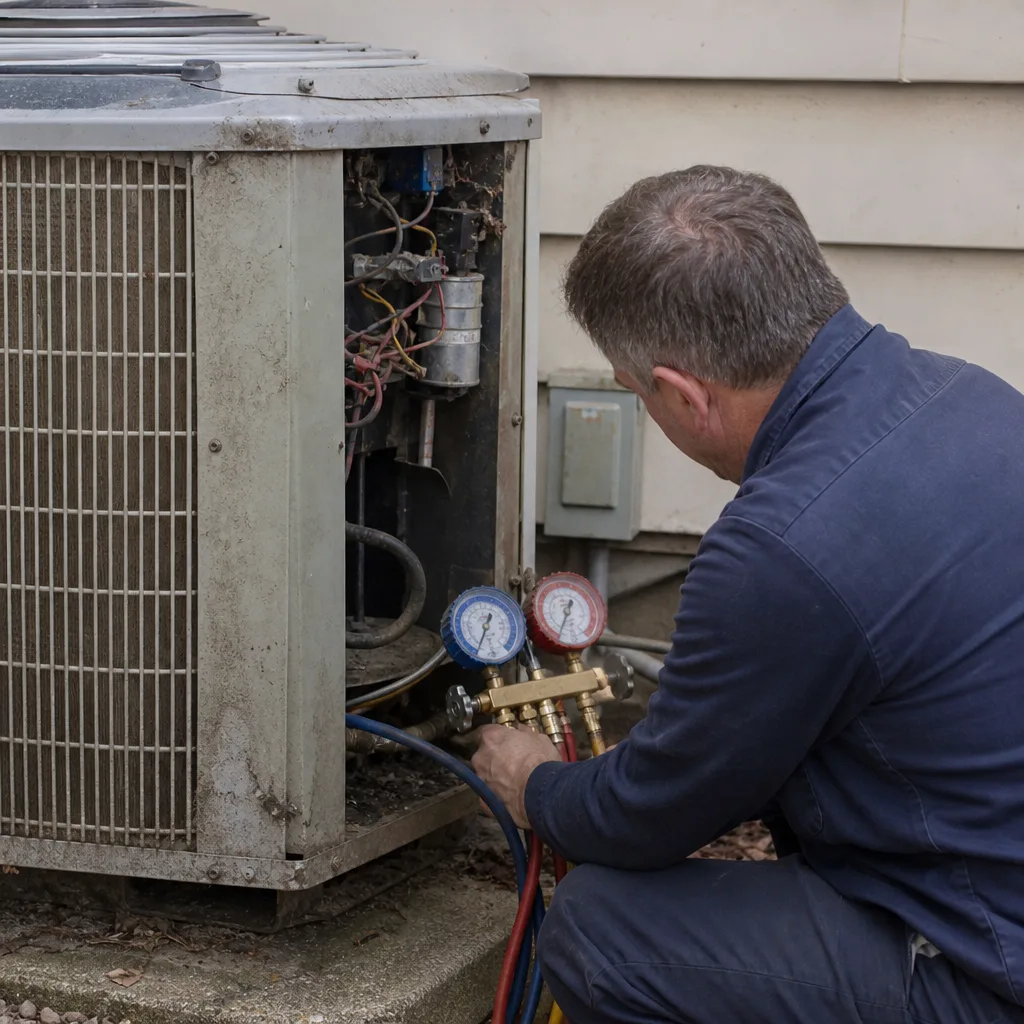 Before
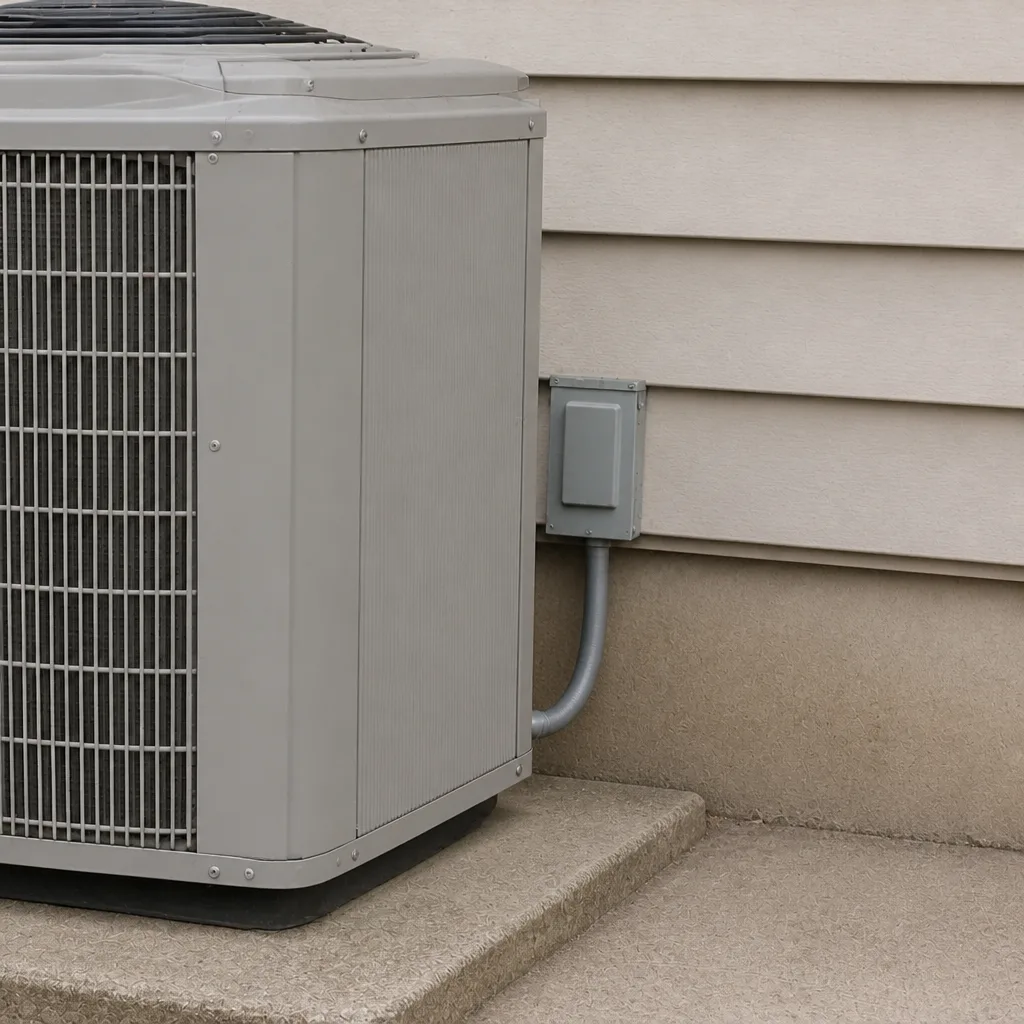 After