
Last updated November 15, 2026
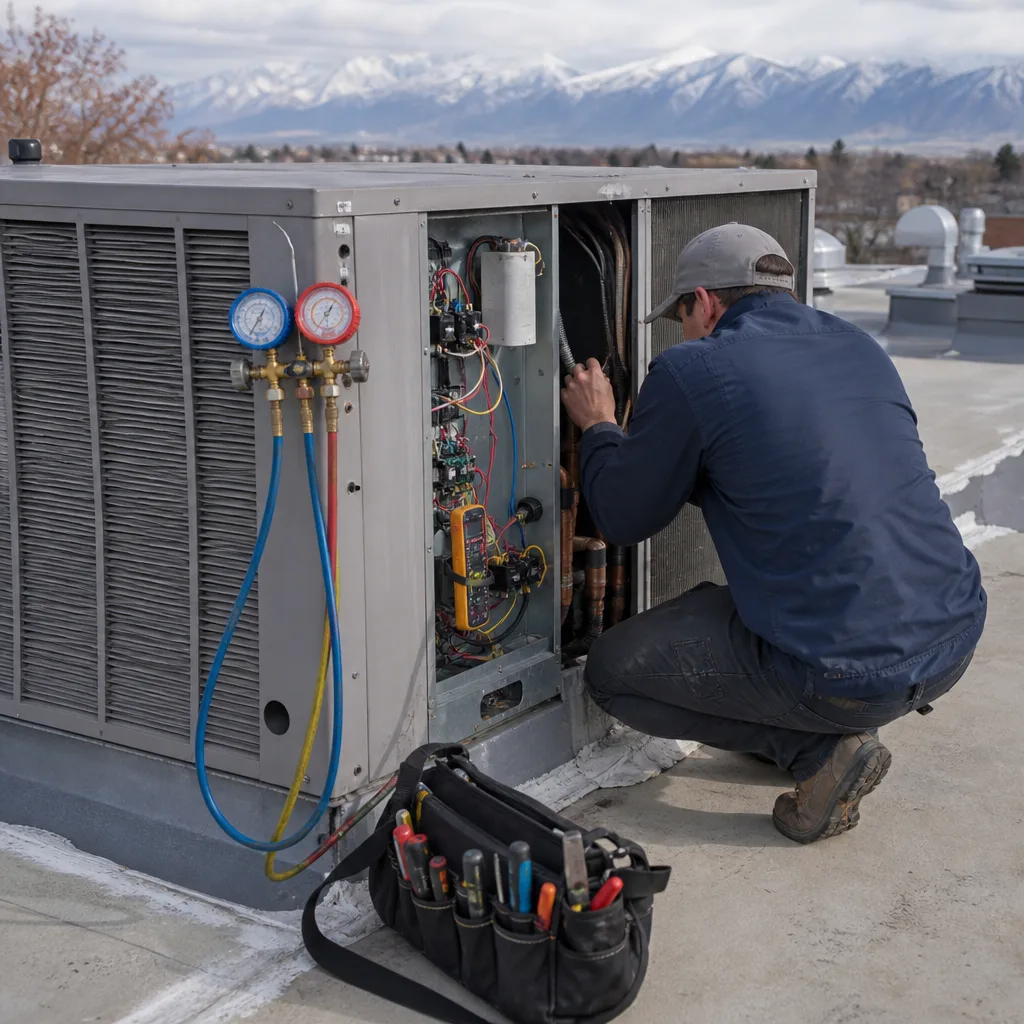
 AC repair
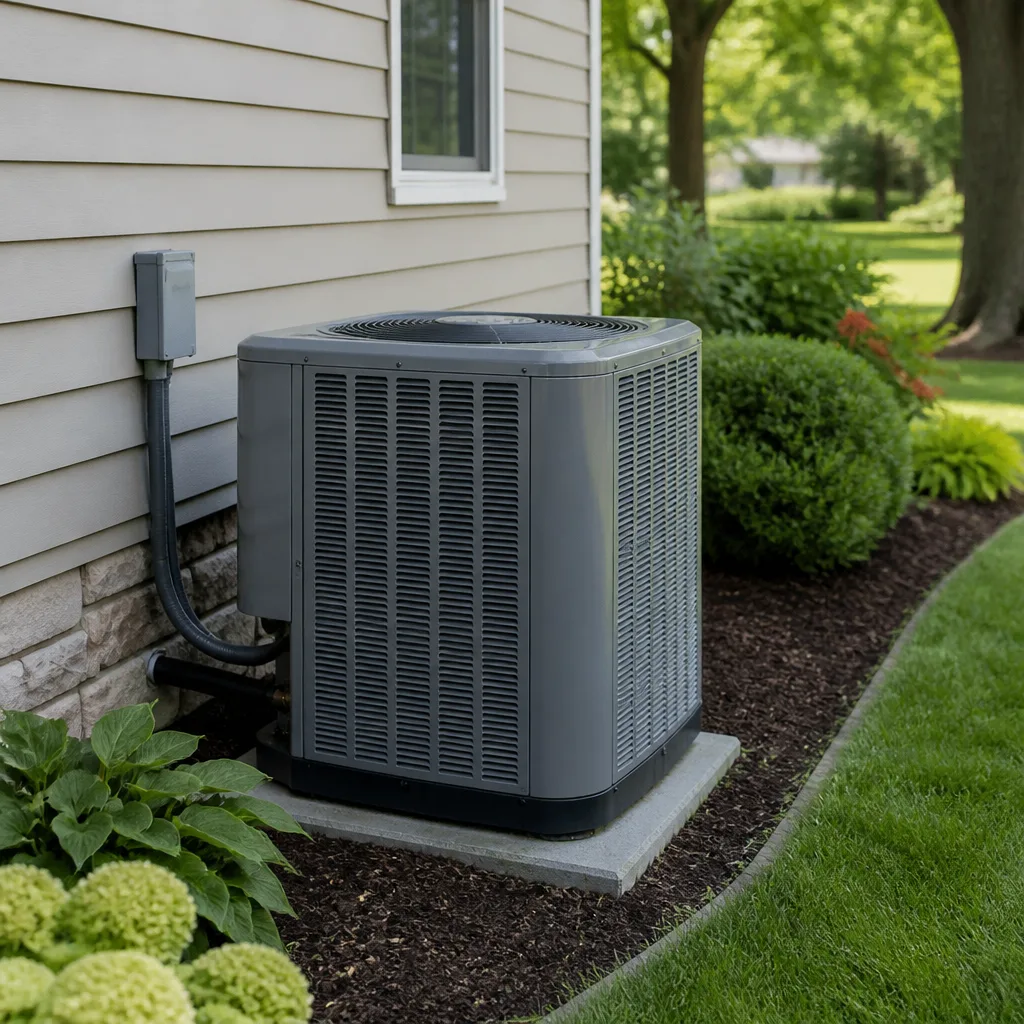
 Furnace & heating
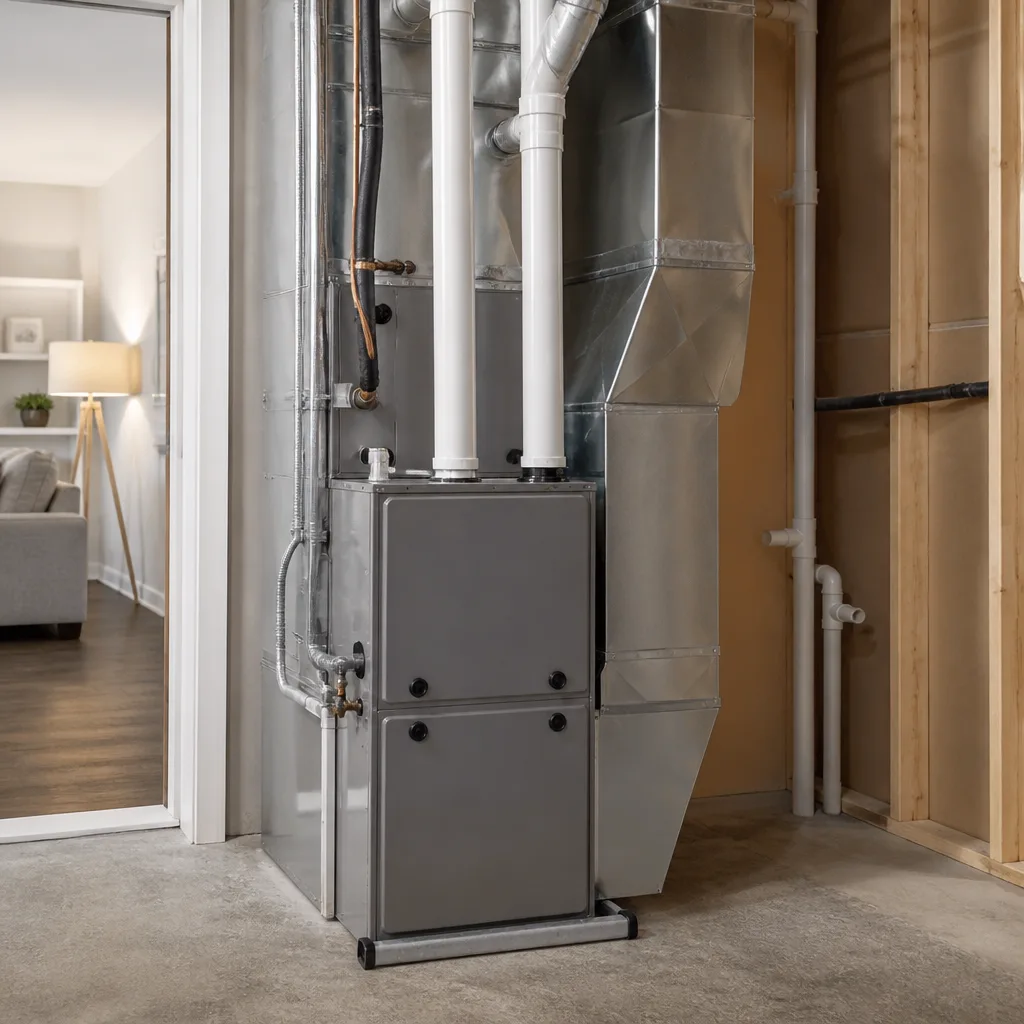
 Heat pumps
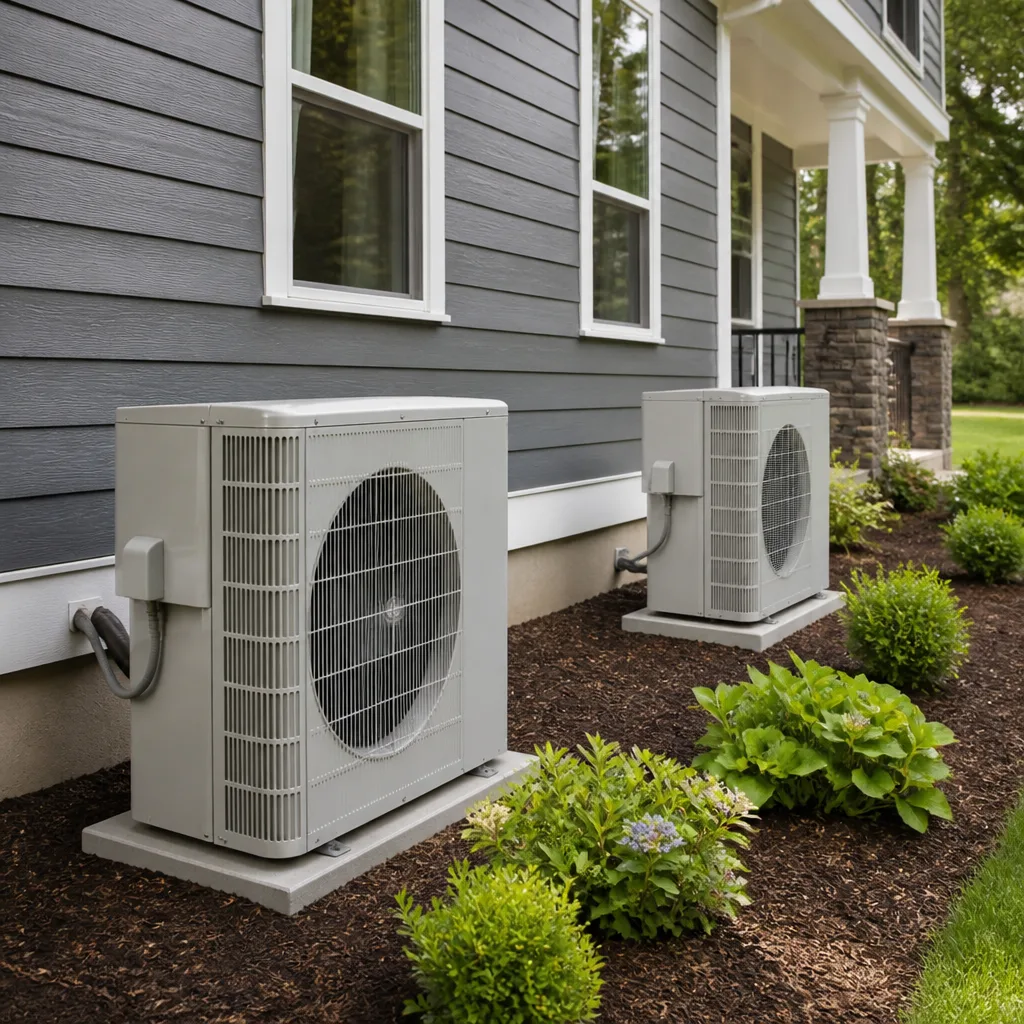
 Ductless mini splits
 Carrier
 Trane
 Goodman
Seasonal tune-up and full diagnostic on your Carrier, Trane, or Goodman system - readings shown to you before any repair is proposed
Diagnosis first, numbers second - you approve the repair price before a single part goes in.
Get your free estimateAC Installation Maintenance Checklist for West Jordan Homeowners
A new AC unit in West Jordan loses measurable efficiency in its first summer if three specific tasks aren’t completed before that first 95°F week, and they’re almost never covered in the paperwork the installer leaves behind. Most homeowners treat installation day as the finish line: the system runs, the house cools, done. The better way to see it is that installation day is day one of a 24-month break-in window, and what happens in that window decides whether the equipment performs to spec for its full service life. This guide covers the site checks that belong before the pad is set, the 30-day, 6-month and 12-month inspection intervals with what to verify at each, how local water affects condensate drainage, which tasks actually protect a manufacturer warranty, and how to tell normal break-in behavior from an early red flag.
Quick Answer
A new AC installation in West Jordan should be inspected at 30 days, 6 months, and 12 months, with refrigerant pressures, electrical connections, condensate drainage, and coil condition checked at each interval, not just the filter. Before installation, verify pad placement, shade exposure, and line set routing against the actual site conditions. Those early checks are what keep the system performing to spec and protect the manufacturer warranty.
Styles & brands we work with
- AC repair
- Furnace & heating
- Heat pumps
- Ductless mini splits
- Carrier
- Trane
- Goodman
Table of Contents
- Pre-Installation Site Checks Specific to West Jordan
- What to Do in the First 24 Hours After Installation
- The 30-Day Inspection: What to Verify
- The 6-Month Inspection Before the First Cooling Season
- The 12-Month Inspection: End of the Break-In Window
- Hard Water and Condensate Drainage in West Jordan
- Warranty-Preservation Actions That Actually Matter
- Normal Break-In Behavior vs. an Early Red Flag
- Common Mistakes to Avoid
- When to Call a Professional
- Frequently Asked Questions
Pre-Installation Site Checks Specific to West Jordan
The maintenance timeline begins before the unit does. A checklist that only starts at startup misses the decisions that determine how much maintenance the system will need. In West Jordan, three site factors deserve a walkthrough before anything is set in place.
Pad placement
The condenser pad needs a level surface that won’t settle after the first freeze-thaw cycle. Placing it on loose fill or against a slope that drains toward the house sets up a drainage problem you’ll be chasing for years. The pad should sit clear of the foundation and clear of the drip line from the roof, where snowmelt and spring runoff concentrate.
Shade exposure
A condenser in full afternoon sun works harder in July than the same unit in afternoon shade. That’s especially true on the east bench and the higher-elevation streets of West Jordan, where summer sun is unforgiving and the afternoon heat lingers. If shade is available on the north or east side of the home, ask about routing the line set there. Don’t plant shrubs tight against the coil; a foot of clearance on all sides keeps airflow where it belongs.
Line set routing
The refrigerant line set should run the shortest practical path between indoor and outdoor units, with the right insulation and a drip leg where condensation can collect. Long, uninsulated runs lose efficiency and invite condensation problems. Interference with the furnace flue or gas line is easy to miss and belongs in a proper pre-installation check.
If you’re still at the planning stage, our guide to AC installation covers equipment sizing and what the first appointment involves.
What to Do in the First 24 Hours After Installation
The first day sets the baseline every later inspection is measured against. Use it to record how the system behaves when new, so you have something concrete to compare against in month six and month twelve.
- Record the thermostat setpoint and the actual room temperature at midday. These two numbers should track closely; a large gap on a mild day is worth reporting.
- Note the sound. Write down what a normal startup sounds like, how the compressor comes on, and how quickly the outdoor fan settles into its rhythm.
- Look at the condensate drain. Water should move freely from the indoor coil, either to a floor drain, a condensate pump, or the exterior. Any pooling near the unit floor is a question for your installer.
- Find the breaker and the disconnect and make sure they’re labeled. Knowing where they are in an emergency saves minutes.
- File the paperwork: model and serial numbers for the indoor and outdoor units, the startup readings the installer took, and the date of the installation. Save all of it in one place; a warranty claim and any future service appointment will ask for it.
Nothing on this list requires opening a panel. If the system won’t run, call the installer. Never open the electrical panel or the refrigerant circuit yourself. Both carry genuine risk, and work inside them belongs to a trained technician.
The 30-Day Inspection: What to Verify
Thirty days gives the system time to run through enough cycles to reveal what a one-hour startup check can miss. This is the first real measurement point. What should you verify?
- Filter condition. A filter loaded up in 30 days means dust is getting into the return, not just into the filter. In West Jordan’s windy spring and dry summer, dusty return air is common; a filter that’s already gray at 30 days is a sign to check the return duct seals.
- Refrigerant pressures. A slow leak or a slightly undercharged system can look normal on a mild day and fail on the first hot one. A technician should confirm the pressures match the manufacturer’s spec for the ambient temperature.
- Electrical connections at the condenser and disconnect. A loose lug shows up quickly. Loose connections cause heat and heat causes failures. This is a job for a technician with a meter, not a homeowner.
- Condensate drainage. Does the water move cleanly? Any sign of buildup or algae in the drain line at 30 days is a strong signal for the hard water issue covered later in this guide.
- Filter of the indoor coil. Confirm the coil is clean. A coil that’s already dirty at 30 days means the dust problem is upstream and needs fixing.
If the unit is a Carrier, Trane, or Lennox, the manufacturer’s startup sheet will list the target pressures. Any York, Daikin, or Bryant startup sheet will too. Make the technician note their readings against it. We service all nine of the major brands we cover, including American Standard, Rheem, and Goodman, which means the same appointment can follow the brand-specific spec rather than a generic one.
The 6-Month Inspection Before the First Cooling Season
For a spring installation, the 6-month mark lands just as the first real heating season ends. For a fall installation, it lands just as summer starts. Either way, this is the checkpoint that protects your first full cooling season, and the tasks are more than a filter change.
- Wash the condenser coil. West Jordan’s summer dust settles on the fins and insulates the coil. A dirty coil runs higher pressure and higher amp draw. A technician rinses it with the correct cleaner and checks for bent fins.
- Confirm refrigerant charge against spec. Ambient temperatures at 6 months are close to design conditions, so a technician can compare measured superheat and subcooling values against the manufacturer’s chart, which is the accurate way to confirm the charge.
- Check the condensate drain pan and line. Any buildup in the drain or pan at 6 months is the clearest early sign that hard water is working on the system.
- Inspect electrical connections and capacitors. Capacitors are a wear item; catching a weak one before it fails in a heat wave is far cheaper than a mid-July call.
- Test the thermostat against the actual room temperature. Any drift of more than a degree or two is a calibration issue worth correcting before the cooling season.
If the first summer is already in the rearview mirror, this inspection is the same thing in reverse: it’s the furnace-side start of the cycle. We cover both, and our furnace repair team works from the same service history so nothing gets lost between seasons.
The 12-Month Inspection: End of the Break-In Window
Twelve months after installation, the system has completed a full cycle of heating and cooling. The break-in window is closing, and this is the inspection that sets the baseline for the rest of the unit’s life.
- Full coil inspection. The evaporator and condenser coils should be clean inside and out. Any sign of corrosion on the indoor coil is worth watching, and any sign of oil at a fitting is a leak signal.
- Refrigerant leak check at all accessible joints. A slow leak that started in manufacturing or from a shipping vibration will show up by 12 months. Finding it here keeps it a small repair, not a system replacement.
- Condensate drain flush and, if needed, a drain treatment. The 12-month mark is the checkpoint where a flush is worth doing whether or not there’s visible buildup.
- Electrical torque check on all lugs. Re-torque connections that settle during the first year of thermal cycling; this is one of the most common warranty-claim causes that a maintenance visit would have prevented.
- Airflow measurement at the return and supply. Compare against the startup readings. A drop in airflow signals a duct issue that needs fixing before it costs efficiency.
- Ductwork inspection in accessible areas. Fitting leaks at the plenum and supply boots are common and cheap to seal when caught early.
If the inspection surfaces a problem, the question becomes repair or replace. Our guide to AC repair in West Jordan covers both paths, and the answer for a system that’s a year old is almost always to repair under warranty.
Hard Water and Condensate Drainage in West Jordan
Utah’s water is hard, and West Jordan’s condensate drains feel it. Hard water leaves mineral scale in drain lines and pans, and that scale narrows the line until it clogs. A condensate clog in the middle of July isn’t just an inconvenience: the drain pan overflows, water runs into the ceiling, and the system shuts down on its safety switch.
Here’s what to do in the first season:
- Check the drain line monthly in season. Any visible crusting at the pan fitting is a sign to schedule a flush.
- Ask about a float switch. A safety float in the drain pan will shut the system down before it overflows. If the installation didn’t include one, it’s a worthwhile addition.
- Use a drain pan treatment recommended by your installer. A quality pan treatment slows scale and biological growth; ask which one is compatible with your brand rather than choosing blindly.
- Flush the drain at every inspection. The 30-day, 6-month, and 12-month windows are the schedule that works for a hard water area.
- Watch for a slow-draining line in winter too. A heat pump running in heating mode makes condensate too; clogged drains are not a summer-only problem.
If your system runs a humidifier in winter, the condensate drainage and the humidifier’s water supply deserve the same attention. Hard water doesn’t take the heating season off.
Warranty-Preservation Actions That Actually Matter
Most manufacturer warranties require regular maintenance, and most require documentation of it. That documentation is your burden, not the installer’s, which is why it’s worth knowing what’s actually required before you need to file a claim.
- Keep the maintenance log. The date, the technician’s name, and the readings taken. If you perform any part of the maintenance yourself, log that too.
- Register the equipment with the manufacturer. Many brands require registration within a set window after installation for the full warranty term to apply. The registration deadline is in your paperwork and the brand’s own documentation.
- Use approved filters. The wrong filter can void coverage in some cases or, at minimum, reduce airflow enough to degrade performance.
- Don’t let anyone but a qualified technician open the refrigerant circuit. A DIY recharge or an uncertified service call can void the compressor warranty.
- Keep the installation paperwork. The startup readings are the baseline that every future warranty claim will compare against.
- Read the exclusions. Warranties vary considerably between brands. A York warranty and an American Standard warranty may not have the same maintenance terms. Ask your installer to walk you through the maintenance clauses for your specific equipment before they leave.
If a component fails in the first year, call the installer first, not a general handyman. Claiming warranty on a system that’s been worked on by someone outside the warranty chain is a common source of denials.
Normal Break-In Behavior vs. an Early Red Flag
The first 24 months of a new AC in West Jordan produce some predictable quirks. Knowing which are harmless takes the panic out of summer, and knowing which aren’t can save the compressor.
Usually normal
- A soft rattle from the outdoor unit for the first few cycles as the compressor breaks in.
- The outdoor fan running at a slightly different speed as the ambient temperature changes.
- Condensation on the suction line, and a small puddle under the unit on a humid day; this is normal and belongs to the drain.
- A slight refrigerant “whoosh” at startup and shutdown.
- The thermostat reading slightly off from the room thermometer; the exact match comes from calibration at the first inspection.
Worth a callback
- Loud clanking, grinding, or screeching from the outdoor unit.
- The breaker tripping repeatedly; that’s an electrical issue, and stopping to investigate is the right move.
- The system freezing up at the indoor coil, or ice on the indoor line.
- The room temperature failing to reach the setpoint on a day that isn’t particularly hot.
- Water pooling on the floor near the indoor unit, or water stains appearing on the ceiling below the air handler.
- A burning or hot-wire smell near the indoor unit; this one deserves shutting the breaker off and calling.
If any of the red-flag items appear, the smart move is the installer, then us if the installer isn’t available. We work on the same nine brands the equipment came from, and we can pick up a service log mid-stream without needing to re-learn the equipment.
See the difference
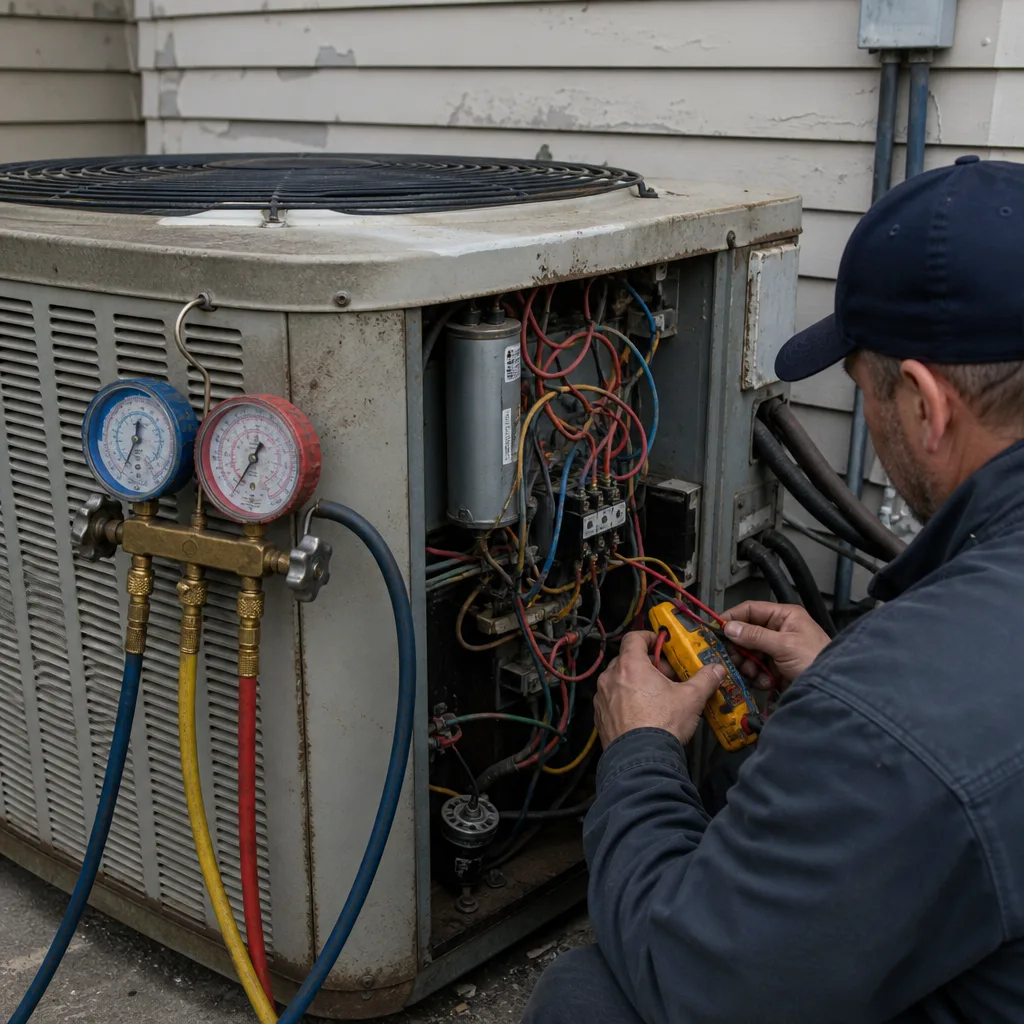 Before
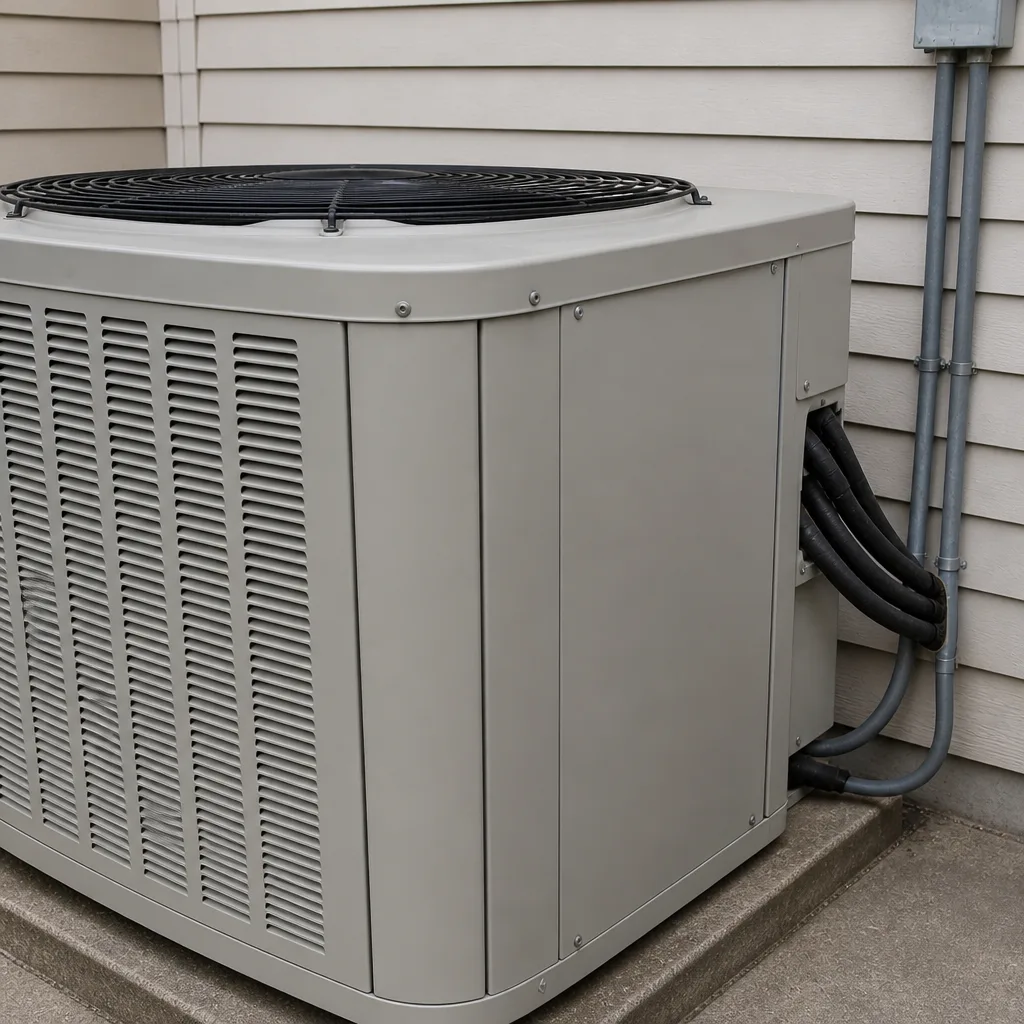 After
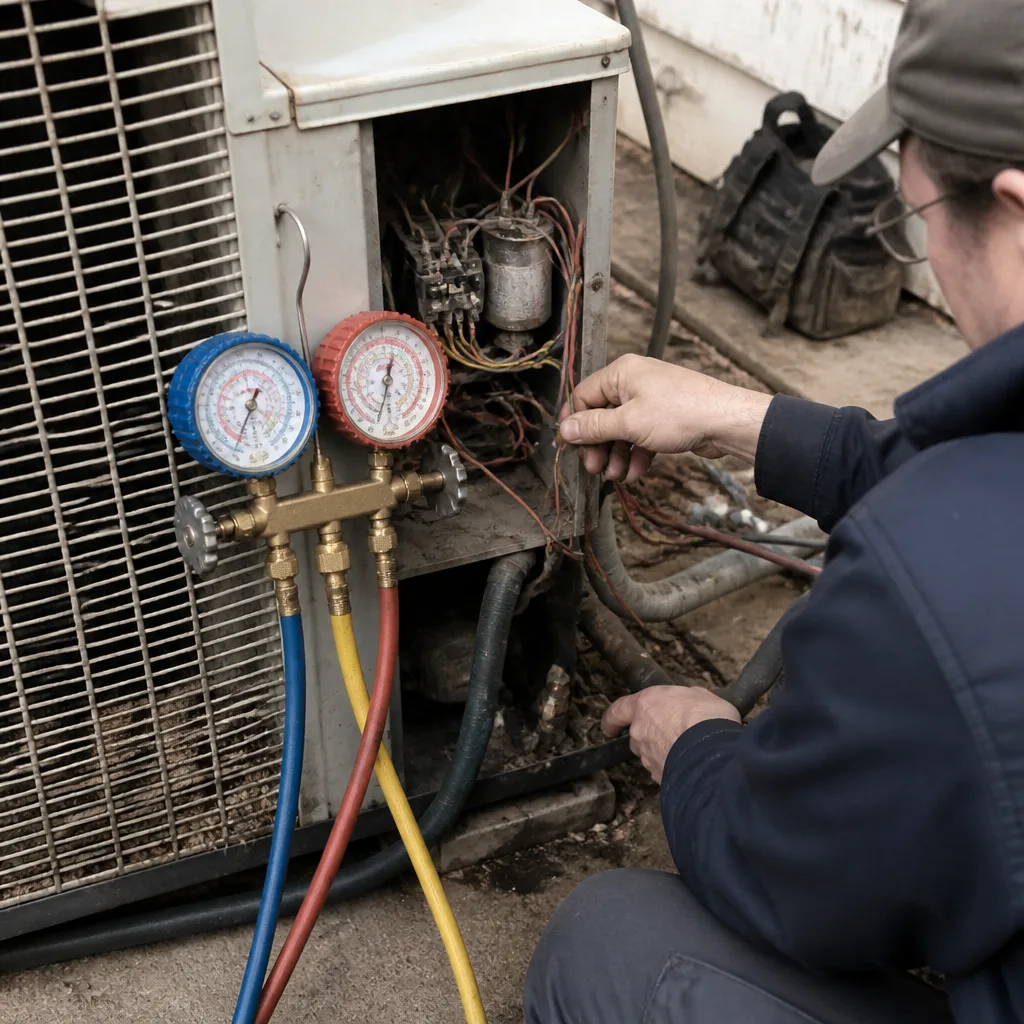 Before
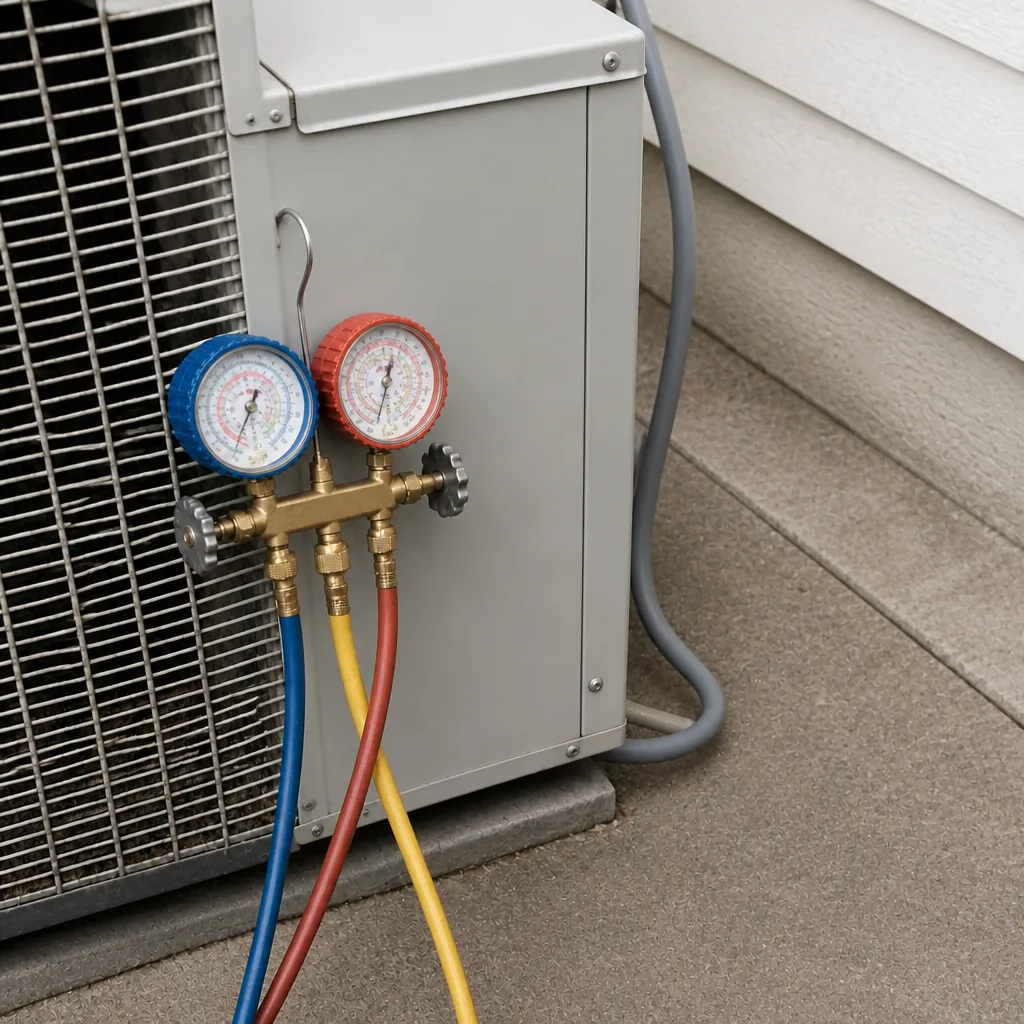 After
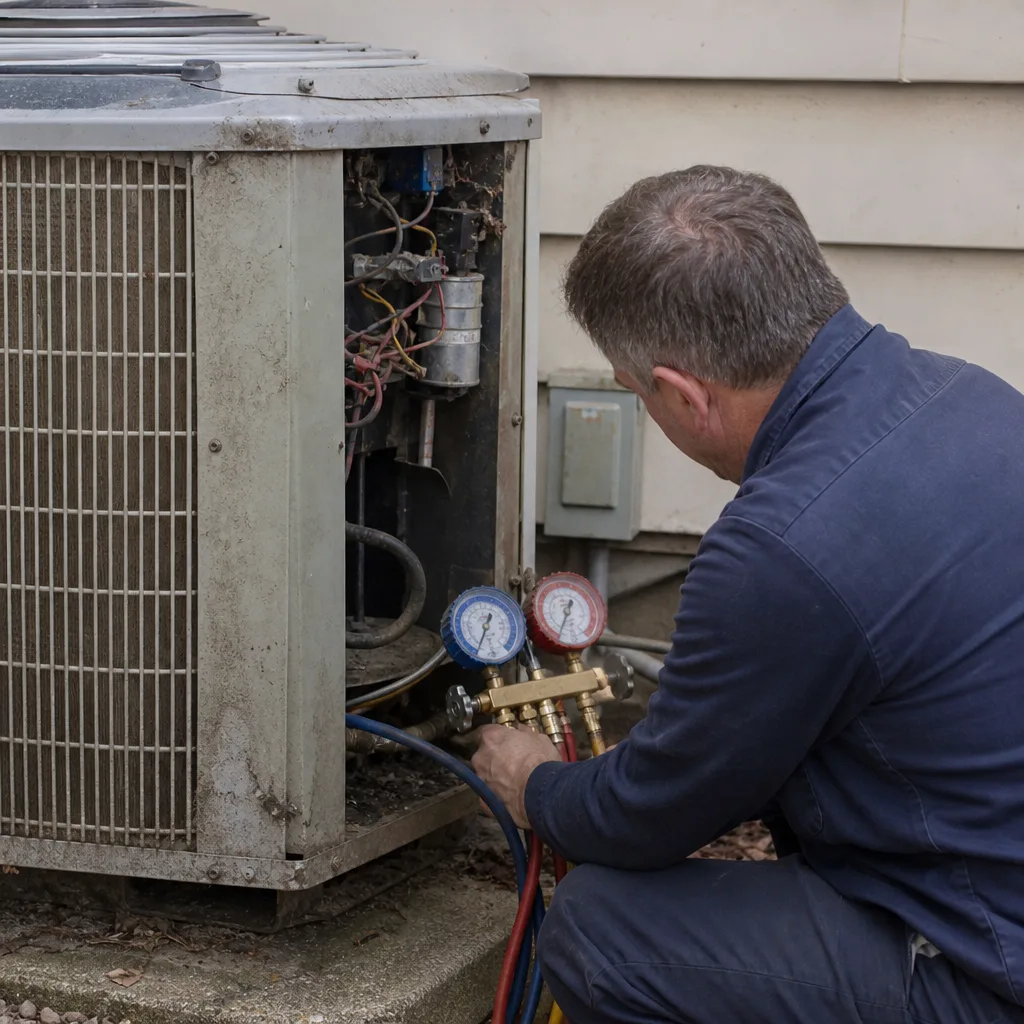 Before
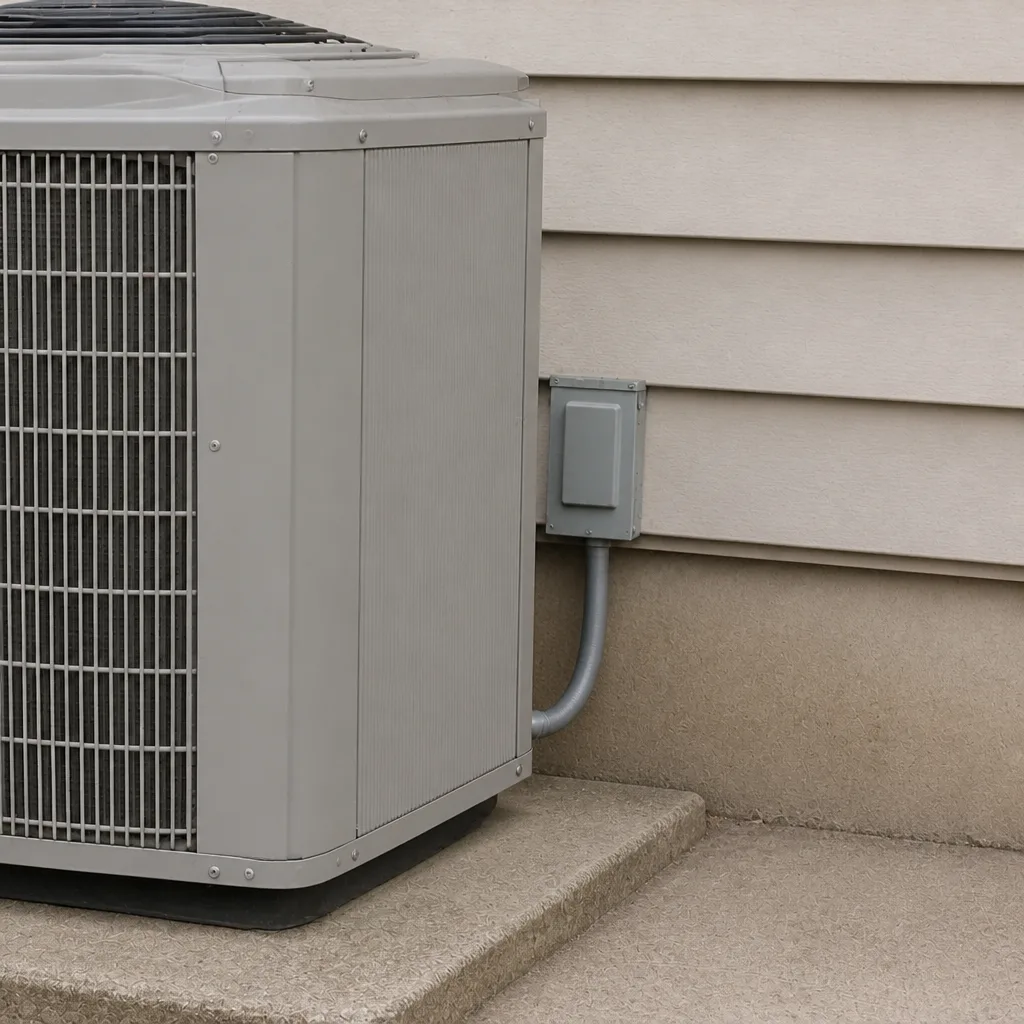 After
Common Mistakes to Avoid
- Treating the filter change as the whole checklist. The filter is the easy item, which is exactly why it gets over-weighted. Refrigerant pressure, electrical torque, and condensate condition matter more in the first year.
- Skipping the 30-day inspection because the system “feels fine.” Small charge errors and loose lugs feel fine on a mild day and fail on the first 95°F week. The 30-day visit catches them while the system is still under warranty.
- Placing the condenser pad against the house on the south or west side. Afternoon sun against a south or west wall plus a tight clearance to the foundation is the worst combination for efficiency and drainage in West Jordan.
- Ignoring the condensate drain because “it’s just a little water.” Hard water scale in the drain line is a slow clog, and by the time you notice the water, it’s already in the ceiling.
- Letting a non-warranty technician work on a new system. A single uncertified visit can void the manufacturer warranty on a system that’s months old. Check who’s touching the equipment before they open the panel.
- Choosing a “one stop” home-services outfit over an HVAC specialist. A company that splits attention across plumbing, roofing, and general contracting won’t be sharp on the brand-specific details of a new AC installation in West Jordan.
- Assuming you remember the thermostat readings from memory. Record them at installation and compare, not from memory. Six months is a long time to recall the exact setpoint and actual room temperature.
When to Call a Professional
Some tasks on this checklist are homeowner-level: changing filters, cleaning the area around the outdoor unit, confirming the drain is moving. Others cross into professional territory, and crossing that line isn’t worth it. Call a technician when:
- The system won’t hold temperature at the setpoint on a warm day, or the indoor coil is freezing.
- You hear grinding, screeching, or loud clanking from the outdoor unit.
- Water appears near the indoor unit or on the ceiling below the air handler.
- The breaker trips, or you smell hot wiring near the new equipment.
- You’re at the 30-day, 6-month, or 12-month inspection window and want the readings taken by a qualified technician against the manufacturer’s spec.
If the situation involves an electrical panel, the refrigerant circuit, or a non-start on a hot day, call us sooner. Those tasks belong to a trained technician, not to a weekend project. AC Repair West Jordan offers free estimates in West Jordan; call (833) 946-8705. We answer 24/7. Fast dispatch from 7am to 7pm, Sunday through Friday. If your equipment is a Carrier, Trane, Lennox, Goodman, Rheem, York, Daikin, Bryant, or American Standard unit, our technicians have the specifics for that brand in hand.
Frequently Asked Questions
A new AC in West Jordan should be inspected at 30 days, 6 months, and 12 months post-installation, then once a year afterward. Those first three intervals are the break-in window, and they catch charge errors, loose electrical connections, and drain issues while the system is still under warranty. We service all nine major brands in this area; call (833) 946-8705 for a free estimate if the next interval is coming up.
Water near the indoor unit usually means the condensate drain is clogged or the drain pan is overflowing, and West Jordan’s hard water makes that clog likely. A float switch should have shut the system down before the water reached the floor; if it didn’t, that’s worth a callback. Call (833) 946-8705 and we’ll check the drain and the pan; estimates are free.
Yes. The 30-day inspection catches refrigerant charge errors, loose electrical lugs, and early condensate buildup that a one-hour startup check can miss. Catching them here is a quick fix under warranty; catching them in July is a service call on a hot afternoon. Call (833) 946-8705 to schedule the 30-day check; we work on Carrier, Trane, Lennox, Goodman, Rheem, York, Daikin, Bryant, and American Standard equipment.
Most manufacturer warranties require documented regular maintenance, correct filter use, and service by a qualified technician, with the exact terms varying by brand and model. Register the equipment with the manufacturer before the registration deadline, keep the service log, and read the maintenance clause. If your paperwork is unclear, we can walk through it; call (833) 946-8705. Estimates are free.
Filters, area cleaning, and a visual check of the drain are homeowner tasks; refrigerant checks, electrical connections, and coil cleaning are not. Anything involving the electrical panel or the refrigerant circuit carries real risk and belongs to a trained technician. Call (833) 946-8705 for the professional checkpoints; we answer 24/7 and dispatch from 7am to 7pm, Sunday through Friday.
First, wait a day. A single missed setpoint on a day well above the average high can be normal. Repeated misses, ice on the indoor coil, or a room temperature stuck far from the setpoint are not. Call (833) 946-8705 and we’ll take a look; estimates are free and the repair or replacement question gets an honest answer for your specific system.
The Bottom Line
The first 24 months after an AC installation in West Jordan are a break-in window, and the 30-day, 6-month, and 12-month inspections are the ones that decide whether the system performs to spec for the rest of its life. The pre-installation site check determines how much of that maintenance you’ll need to do. Hard water and summer dust make the drain and coil the two areas to watch most closely. Keep the service log, register the equipment, and don’t let anyone outside the warranty chain open the refrigerant circuit. Do that and the system you install in West Jordan will return the favor every July.
If the next inspection window is coming up or you’re wondering whether it’s time to look at a new system, our West Jordan team covers the full HVAC scope: AC installation, furnace repair, and complete system replacement, on the nine major brands we work with daily. One specialist team for your furnace and your AC, so the same company that installed the system is the one maintaining it.
Call (833) 946-8705 for a free estimate. We answer 24/7. Fast dispatch from 7am to 7pm, Sunday through Friday. Repair or replace, we’ll give you the honest answer for your specific system, your specific home, and your specific West Jordan neighborhood.
Written by the team at AC Repair West Jordan.